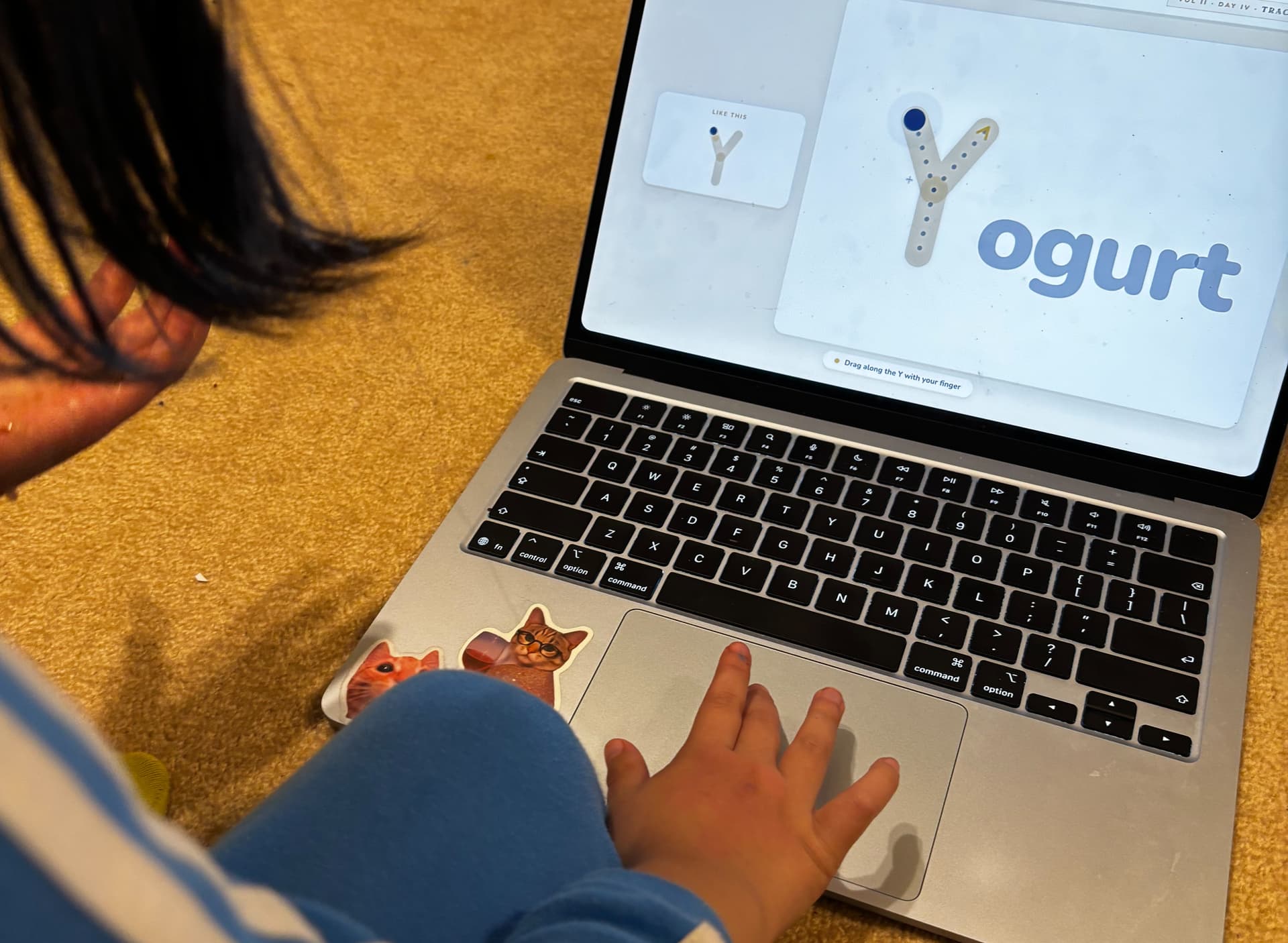
Watching a YouTube video about life in New Zealand, one comment stayed with me. The creator said they felt anxious about the way New Zealand doesn't give clear rankings or scores — understandable, coming from a Korean education system where everything is measured and ordered. It's a feeling I can relate to. It's probably the same reason many Asian parents seek out schools that still use streaming: beyond objective outcomes, there's a reassurance in being able to see, concretely, where your child stands. Schools like Macleans College and Rangitoto College — high-achieving schools that maintain streaming — already have Asian student populations of between 35 and 54 percent.
For me, though, NZ approach has felt like a relief. The stress of ranking children against each other, of reducing growth to a number, falls away a little. Instead, school points to the direction of a child's development — how they're doing, how they're changing, what can't be captured in a score.
That said, I don't fully agree with the idea that primary school is a time to simply be happy and set learning aside. No parent educates their child purely for happiness. But the aims of education here do feel different — and research suggests the difference matters.
Competitive school environments tend to raise academic achievement while lowering students' life satisfaction. A study of Korean students in grades 9–11 (Rudolf & Lee, 2023) confirmed this trade-off — the researchers described it as students paying with their wellbeing for academic achievement. How sad it is. Children learning, before they've finished growing up, to trade their wellbeing for achievement.
New Zealand has chosen not to make that trade. Primary school isn't a foundation for scoring higher in maths, science, and social studies — it's time spent building the scaffolding for a self-directed life. Equal weight is given to physical capability, social skills, and learning to live alongside others. The New Zealand Curriculum (Ministry of Education, 2007; currently being refreshed as Te Mātaiaho) formally defines five key competencies students are expected to develop: thinking, using language and symbols, managing self, relating to others, and participating and contributing. The goal is not subject-score achievement — it's the capacity to live well.
Kiwi Kids and Their Hobbies
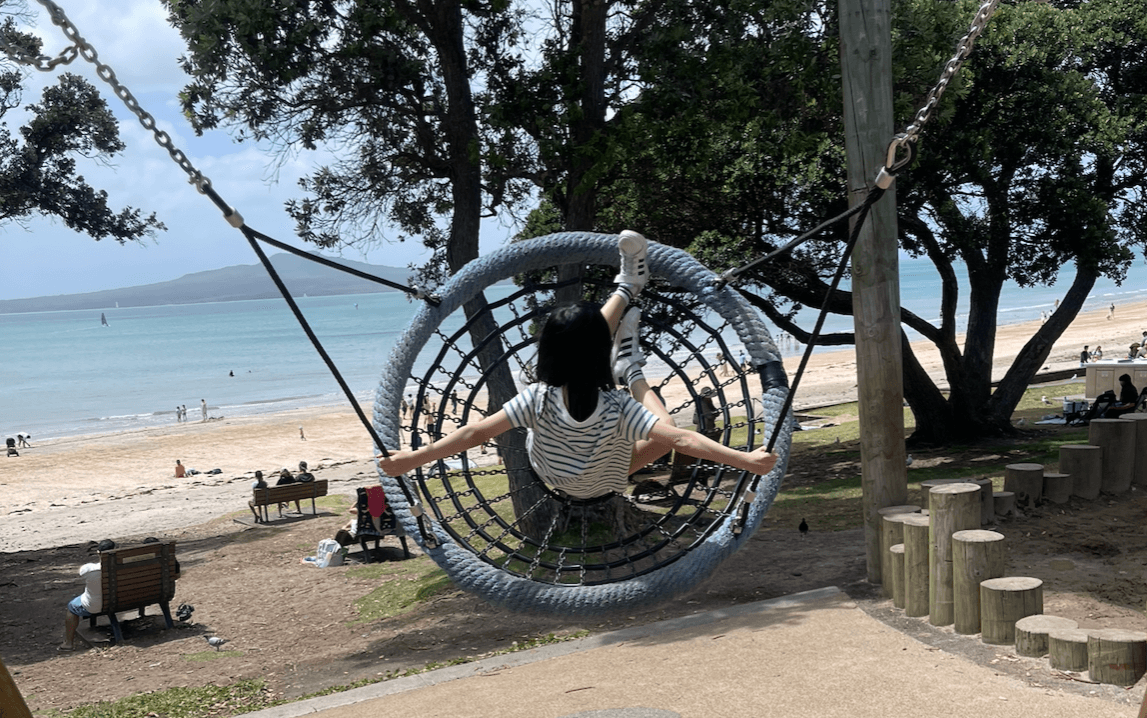
So children are constantly offered options: sports, arts, new activities. Min tried basketball, tennis, and guitar in our first year here. And beyond organised activities, children simply run on beaches, hang from monkey bars and flying foxes, and climb trees barefoot — becoming comfortable in their own bodies without anyone scheduling it.
Active hobbies aren't the only kind that count. Our children lean more towards piano and art than sport, and that's just as good. It doesn't require exceptional talent or the latest instrument. A child who loves making things, reading, watching films, playing games, and has one familiar instrument already lives richly. Research consistently finds that participation in extracurricular activities and hobbies positively affects children's self-esteem, social competence, and emotional wellbeing (County Health Rankings, 2024; OECD Social and Emotional Skills Survey, 2024).
A similar contrast shows up in how extracurricular activities are approached. In Korea, children who went to piano academy three times a week held formal recitals twice a year — weeks of preparation for a single piece, performed before an attentive audience. Art academies did the same: galleries hired, work curated, families gathered. Children experienced their drawings hanging as real art. The confidence and sense of responsibility that came from that was real.
When I first sent a child to guitar lessons here, I was a little taken aback. Five or six children, once a week, thirty minutes together. At the end of term, the whole music school holds a recital — and children go up whether they're ready or not. No extra rehearsals beforehand, no extra practice sessions. Most lessons here — guitar, art, sport — run once a week, thirty to sixty minutes.
When I asked a private tutoring centre about holiday programmes, the response was: "We don't run holiday programmes because we hope children can rest properly during the break." Their measure wasn't adult efficiency — it was children's growth and wellbeing.
Balancing Diligence and Wellbeing
A country that doesn't push competition from an early age. Some might say: that's exactly why there's no talent left, why skilled people leave for Australia and the UK, and why immigrants fill the gaps. There's something to that. A society that doesn't adequately reward effort does tend to stagnate. In 2024, New Zealand recorded a net migration loss of approximately 30,000 people to Australia — the largest since 2012 (Stats NZ, 2024). When the effort doesn't come back, the exhaustion is real, and the decision to leave is understandable. A society that pools rather than flows — some fish find the stillness comfortable, while others dream of following the current somewhere new.
I'm someone who believes in diligence and intensity, deep in my Korean bones. But I believe each person's intensity has its own purpose. Some push hard for achievement. Some for personal satisfaction. Some for the rest that will come after, or for the people they love. And some simply cheer from the side.
At the same time, I always come back to this: the small pleasures of daily life are what make a life feel worth living. That's why I still find hope here. A society where choices are respected, where people can be kind and warm to one another — that society is still healthy.
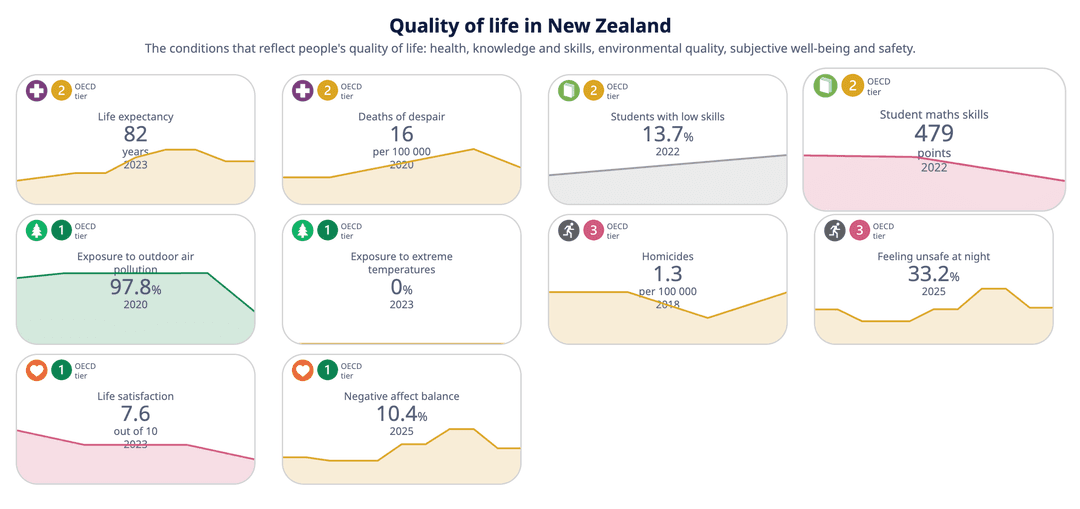
New Zealand ranks in the top tier among OECD countries across key wellbeing indicators — Life Satisfaction (7.6/10), Trust in Others (6.5/10), and Social Interactions (7.8 hours/week) (OECD Better Life Index, 2023/2025).
Read More: Home Learning [NZ] NCEA Is Changing: No More Levels, No More Credits · How To Read a NZ Mid-year Report
한국어 요약
뉴질랜드 생활 유튜브 영상에서 한 댓글이 마음에 남았다. 뉴질랜드는 순위나 점수를 분명히 주지 않아 불안하다는 이야기였다. 모든 것을 재고 줄 세우는 한국 교육을 겪었다면 이해되는 마음이다. 많은 아시아계 부모가 아직 우열반(streaming)을 운영하는 학교를 찾는 것도 같은 이유일 것이다. 내 아이가 어디쯤 있는지 눈으로 확인할 수 있다는 안도감 때문이다.
그래도 나에게 뉴질랜드의 방식은 안도에 가까웠다. 아이들을 서로 비교하고 성장을 숫자로 줄이는 스트레스가 조금 덜어진다. 초등학교가 공부를 제쳐 두고 그저 행복하면 되는 시기라는 생각에 다 동의하지는 않는다. 하지만 이곳 교육의 목표는 분명 다르다. 뉴질랜드 교육과정은 학생이 길러야 할 핵심 역량으로 생각하기, 언어·기호·텍스트 활용, 자기 관리, 타인과의 관계, 참여와 기여를 꼽는다. 과목 점수가 아니라 잘 사는 힘이 목표다. 아이들에게는 스포츠와 예술, 새로운 활동이 끝없이 주어진다. Min은 첫해에 농구와 테니스, 기타를 해 봤다.
과외 활동을 대하는 방식도 다르다. 한국에서는 일주일에 세 번 피아노 학원에 다니고 일 년에 두 번 정식 연주회를 열었지만, 이곳 기타 수업은 대여섯 명이 일주일에 한 번 30분이고, 학기 말 발표회에는 준비가 됐든 안 됐든 모두 무대에 오른다. 한 학원은 아이들이 방학에 제대로 쉬었으면 해서 방학 프로그램을 열지 않는다고 했다. 경쟁을 일찍 밀어붙이지 않는 나라에 대한 비판도 이해한다. 그래도 나는 선택이 존중되고 서로에게 친절할 수 있는 이 사회에서 여전히 희망을 본다.

Yussi
Writer · Social work student, Massey University
A mother of three girls and a Korean immigrant making Mairangi Bay home — writing about starting school, home learning and everyday life on Auckland's North Shore.
More about Yussi →Frequently asked questions
- Do New Zealand primary schools rank students?
- Not in the way Korean schools do. There are no clear class rankings or scores; instead, school points to the direction of a child's development — how they're doing, how they're changing, and what can't be captured in a score.
- What are the key competencies in the New Zealand Curriculum?
- The 2007 New Zealand Curriculum names five key competencies students are expected to develop: thinking; using language, symbols, and texts; managing self; relating to others; and participating and contributing.
- How are extracurricular lessons different in New Zealand?
- Most lessons — guitar, art, sport — run once a week for thirty to sixty minutes. Min's guitar class was five or six children for thirty minutes, and at the end of term everyone went up to the recital whether they were ready or not, with no extra rehearsals.
Join the conversation
Comments
Loading comments...