
Jin has a bedtime ritual that belongs entirely to the two of us. We pull the duvet up over our heads — all the way, until we're completely hidden from the world — and become blanket monsters. "잘 자요, 엄마 이불괴물." (Good night, mummy blanket monster.) "잘 자, 아가 이불괴물아." (Good night, baby blanket monster.) "사랑해, 아가 이불괴물아." (I love you, baby blanket monster.) "나도 사랑해요, 엄마 이불괴물." (I love you too, mummy blanket monster.) We trade these soft, silly words back and forth until her breathing slows and she drifts off to sleep.
Last night, I switched to English. "Love you, baby blanket monster." She didn't pause. Didn't ask what I meant. Just answered, warm and certain: "I love you too, mummy blanket monster."
Learning English at School
Jin turned five without knowing much English. Until a month ago, Jin spoke only Korean. For a five-year-old, her Korean was fluent and confident — but English was almost entirely unfamiliar, and written letters in either language were still strange shapes to her. She'd been working through a Korean handwriting workbook at home, but both Korean and English script were just that: unfamiliar fragments of form. Having watched Min and Hyun learn Hangeul, I'd come to believe that early literacy is best built through steady repetition rather than acceleration. There was no rush.
Then school started. In her first week of school, Jin came home visibly tense — she couldn't follow what her teacher was saying, and she was frustrated that she couldn't communicate properly with the friend she'd made in her class. She told me about describing a mermaid in art class entirely through gesture and movement, dancing with her teacher when words failed her — and after that, she started asking more and more often: "How do you say that in English?" English had become something she needed, as a new means of connection.
Our Children's Bilingual World
Many immigrant parents here face the opposite worry. Children born in New Zealand, or those who arrived young, often shift toward English once kindy or school begins — spending more time in English than in their mother tongue, sometimes quietly losing fluency before anyone notices. Saturday Korean schools exist for exactly this reason: to keep the language, the script, and the culture from fading. We are teaching Korean at the same time for the same reason.
Supporting Literacy at Home
Week by week, she began bringing letters home. She'd wander around the house chanting "Mmm, mmm, Milo Monkey" to herself, then hand me a note with mum written on it in careful letters, face glowing with pride. I made picture cards for the letters she was learning, and watched her beam as she announced to the whole family that she'd used them to spell her own name. We practised writing the letters she already knew a little more neatly, worked through craft activity sheets, and listened to alphabet songs together.
We moved on to the third Korean handwriting workbook — she'd already finished two. I help her find the letters she's already learned on each new page, read aloud which consonant and vowel have come together to make each one, and read to her every day from the books she brings me. We find familiar letters in the pages together.
Reflecting on Bilingual Growth
"I love you too, mummy blanket monster." In that one quiet line at the end of the night, I heard how much she had grown. She added too without being taught. She swapped baby for mummy without a second thought. She no longer checks or asks again when I speak to her simply in English — she just understands, and acts. Small things, and yet enormous. This is what it looks like when two languages begin to settle inside one small head.
Good morning, baby blanket monster. Your fun bilingual world is now out there.
Read More: The First Play Date
한국어 요약
Jin에게는 둘만의 잠자리 의식이 있다. 이불을 머리끝까지 뒤집어쓰고 이불괴물이 된다. "잘 자요, 엄마 이불괴물." "잘 자, 아가 이불괴물아." "사랑해." "나도 사랑해요." 숨이 느려질 때까지 이런 말을 주고받는다. 어젯밤 나는 영어로 바꿔 말했다. "Love you, baby blanket monster." Jin은 멈칫하지도, 무슨 뜻이냐고 묻지도 않고 따뜻하고 확신에 찬 목소리로 답했다. "I love you too, mummy blanket monster."
한 달 전까지 Jin은 한국어만 했다. 다섯 살치고 한국어는 유창했지만 영어는 거의 낯설었고, 두 언어 모두 글자는 아직 낯선 모양이었다. 입학 첫 주, Jin은 선생님 말을 알아듣지 못하고 반에서 사귄 친구와 말이 통하지 않아 긴장한 채 돌아왔다. 미술 시간에 인어를 몸짓으로 설명하며 선생님과 춤을 췄다는 이야기를 한 뒤로는 "이건 영어로 뭐라고 해?"를 점점 자주 물었다. 영어가 필요한 것, 새로운 연결 수단이 된 것이다. 반대로 이곳에서 자란 아이들은 모국어를 잃기 쉬워서, 우리는 같은 이유로 한국어도 함께 가르친다.
Jin은 매주 글자를 집으로 가져왔다. "Mmm, mmm, Milo Monkey"를 흥얼거리고, 정성껏 mum이라고 쓴 쪽지를 내밀었다. 배우는 글자로 그림 카드를 만들어 주었더니 그걸로 제 이름을 썼다며 온 가족에게 자랑했다. 한글 쓰기 교재는 벌써 세 권째다. 그 한 줄에서 아이가 얼마나 자랐는지 들렸다. 배우지 않았는데도 too를 붙였고, baby를 mummy로 바꿨다. 두 언어가 작은 머릿속에 자리 잡기 시작하면 이런 모습이다.

Yussi
Writer · Social work student, Massey University
A mother of three girls and a Korean immigrant making Mairangi Bay home — writing about starting school, home learning and everyday life on Auckland's North Shore.
More about Yussi →Frequently asked questions
- Is it a problem for a young child to learn two languages at the same time?
- Research consistently suggests that young children acquiring two languages simultaneously do not experience long-term delay. Both languages strengthen each other when children have strong exposure and consistent support in each.
- Can a child learn to read in two scripts at once?
- It is demanding but achievable. Steady repetition works better than speed — short, regular sessions rather than long intensive ones. Jin has been learning English phonics at school while working through her third Korean handwriting workbook at home.
- How can parents support a bilingual child's literacy at home?
- Read aloud daily in both languages, reinforce the school's phonics programme with songs, cards or craft, and make letters visible — picture cards, spelling names, finding familiar letters in books. And don't correct code-switching: mixing languages mid-sentence is a normal, healthy sign of bilingual development.
- Why do immigrant children lose their home language?
- Children born in New Zealand, or who arrive young, often shift toward English once kindy or school begins, spending more time in English than in their mother tongue and sometimes quietly losing fluency. That is why Saturday Korean schools exist — and why we teach Korean alongside English.
Join the conversation
Comments
Loading comments...
From our family · StoryPress
Every child has a story. Let them write it.
A five-year-old's daily sentence, growing word by word.
Join the Waitlist →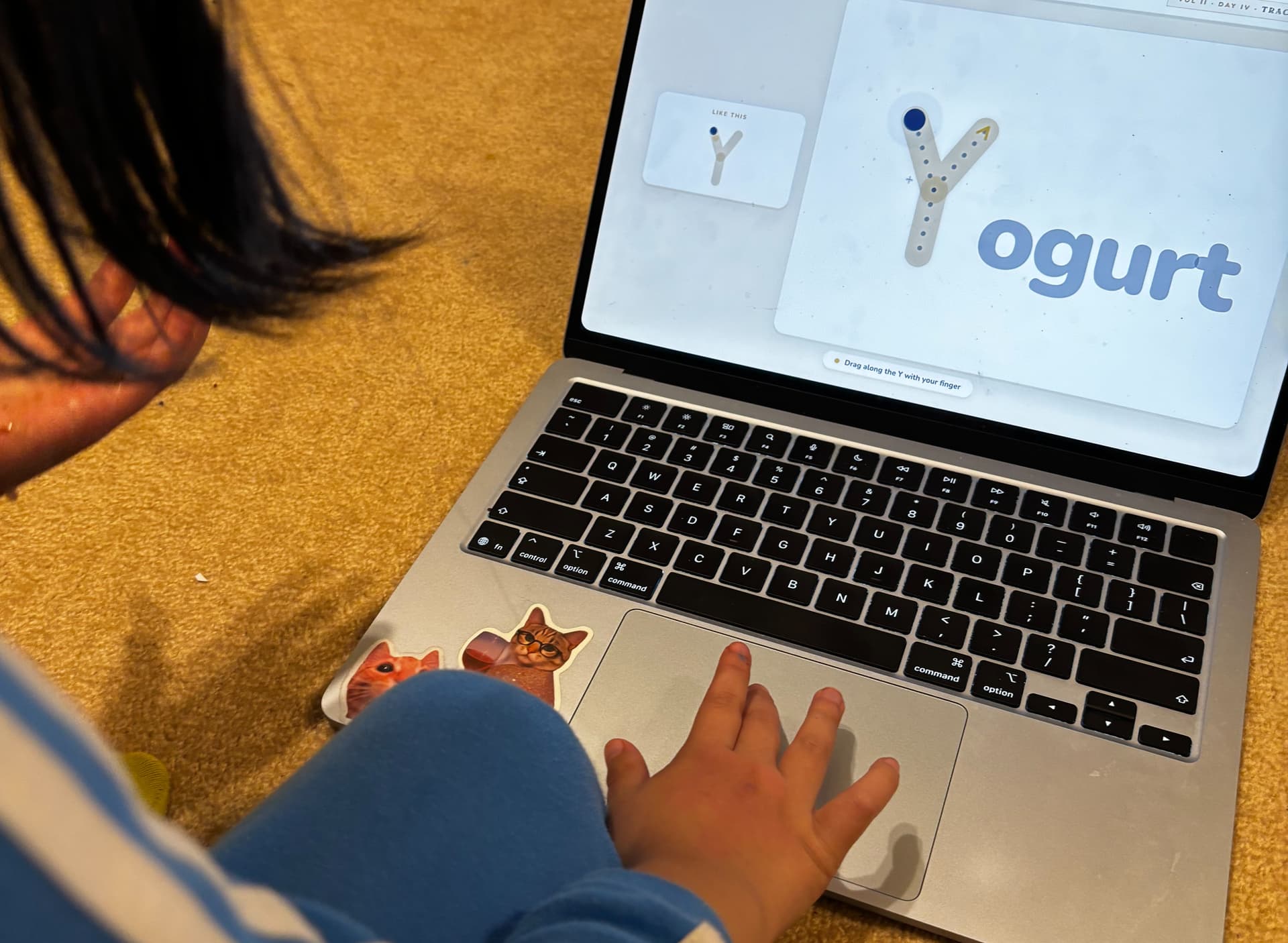
![[Y1] 100 Days of School](/_next/image?url=https%3A%2F%2Fvpayqdatpqajsmalpfmq.supabase.co%2Fstorage%2Fv1%2Fobject%2Fpublic%2Fimages%2Fblogs%2F1784846003918.jpg&w=1920&q=75)