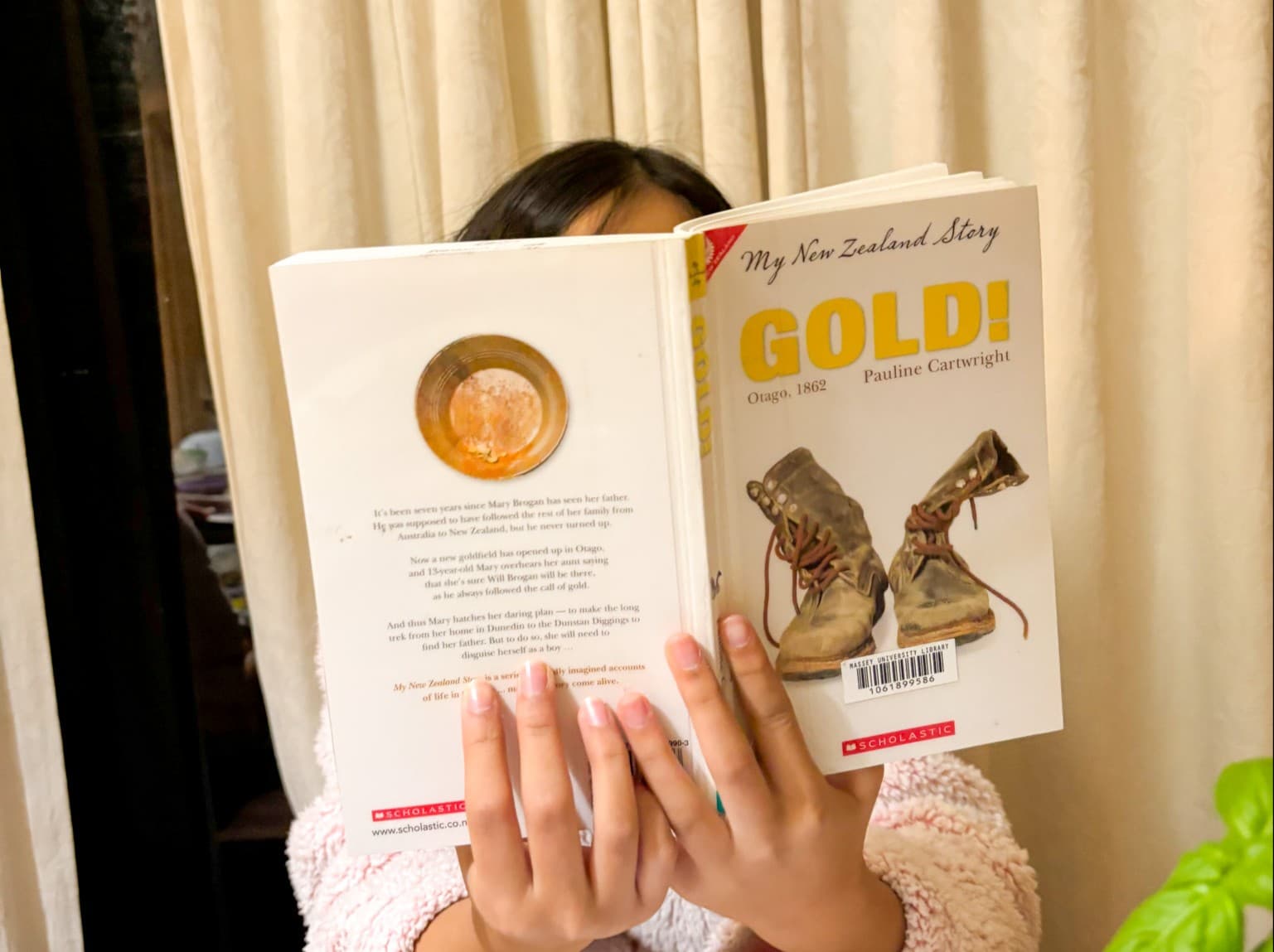
Even a lost guide needs a marker to show which way she's drifting. What should we read? How should we read? Why read at all? Carrying these questions, I drifted through a sea of information until I landed on a National Library report: A National Agenda on Reading for Pleasure: Insights from Communities of Readers Research.*
*Commissioned by the National Library of New Zealand, written by AUT's (Auckland University of Technology) School of Education. A literature review and two case studies, based on Huntly College and the Te Kāhui Ako o Tiriwā community project in West Auckland. 2021.
Its core finding, in the report's own words: "reading, as they progress through school, is more likely to become something they do because they must." In plain terms, the more schools prioritise literacy achievement, the more reading gets recast as a tool for improving that literacy. Reading to study, reading to get ahead, crowds out the time and space for reading purely for pleasure. Digital media is filling some of that gap — it can inform, it can entertain — but outside a few purpose-built ebooks, it rarely sustains the kind of deep, continuous reading a book demands.
The report argues that reading for pleasure, often mistaken for something solitary and personal, is at its core a social activity. A parent's cultural capital matters decisively here: time spent with a child, trips to the library together, simply reading aloud.
Of course the report wasn't written with immigrant or ESOL/EAL families like mine specifically in mind. But it made one thing clear: the vague, directionless feeling I've had since arriving here isn't mine alone. I'm living its limits myself — the cultural capital I once held in my mother tongue doesn't transfer into English, and I feel that gap in my children's reading. In Korea, we always read for joy. Books were our favourite toy, the start of countless games, a stop along the way and sometimes the destination itself. If that journey also grew their own way of thinking and feeling about a story, wonderful. But it was enough if they simply grew up loving books.
But here, I'd picked up an anxiety without noticing. Which book would make English easier for my children, still shaky in it? Which book would they understand completely? Which book would spark enough interest to make them want to study? Books had stopped being play. They'd become a means to an end, and that end was English.
Still, I could steady myself again. We need to go back to reading for joy. Instead of forcing ourselves to sit down with a book to learn English or build literacy, we'll do what we've always done: choose whatever pulls us in, and turn the pages with the kind of restless curiosity that can't wait for the next one.
We're all growing into a new language here, and before anything else, I had to accept a change in my own role. For now, I'm setting down the guide who walks ahead, and becoming a pacemaker who runs alongside instead.
한국어 요약
길 잃은 안내자에게도 어느 쪽으로 떠밀리는지 알려 줄 표지가 필요하다. 무엇을, 어떻게, 왜 읽어야 하는지를 안고 정보의 바다를 떠돌다 국립도서관 보고서 하나에 닿았다. 뉴질랜드 국립도서관이 의뢰하고 AUT 교육대학이 쓴 2021년 보고서로, 문헌 검토와 두 사례 연구를 담았다. 핵심은 이렇다. 학교가 문해력 성취를 앞세울수록 읽기는 문해력을 높이는 도구로 바뀌고, 순수하게 즐거워서 읽는 시간과 자리가 밀려난다.
보고서는 즐거움을 위한 읽기가 흔히 혼자 하는 일로 오해되지만 본질은 사회적 활동이라고 말한다. 함께 보내는 시간, 같이 가는 도서관, 소리 내어 읽어 주기 같은 부모의 문화 자본이 결정적이다. 이민 가족이나 ESOL/EAL 가족을 염두에 두고 쓴 보고서는 아니지만, 이곳에 온 뒤로 내가 느낀 막막함이 나만의 것이 아니라는 건 분명해졌다. 모국어로 쌓은 문화 자본은 영어로 옮겨 오지 않는다.
한국에서 우리는 늘 즐거워서 읽었다. 그런데 여기서는 나도 모르게 불안을 주워 들었다. 어떤 책이 영어를 쉽게 해 줄까, 어떤 책이면 다 알아들을까. 책은 놀이가 아니라 영어를 위한 수단이 되어 있었다. 다시 즐거움을 위한 읽기로 돌아가려 한다. 앞서 걷는 안내자 대신, 곁에서 함께 달리는 페이스메이커가 되기로 했다.

Yussi
Writer · Social work student, Massey University
A mother of three girls and a Korean immigrant making Mairangi Bay home — writing about starting school, home learning and everyday life on Auckland's North Shore.
More about Yussi →Frequently asked questions
- What is the National Library report on reading for pleasure?
- "A National Agenda on Reading for Pleasure: Insights from Communities of Readers Research", commissioned by the National Library of New Zealand and written by AUT's School of Education in 2021. It combines a literature review with two case studies, based on Huntly College and the Te Kāhui Ako o Tiriwā community project in West Auckland.
- Why do children stop reading for pleasure as they go through school?
- The report finds that reading, as children progress through school, is more likely to become something they do because they must. The more schools prioritise literacy achievement, the more reading gets recast as a tool for improving it — crowding out time for reading purely for pleasure.
- How can parents encourage reading for pleasure at home?
- The report argues that reading for pleasure is at its core a social activity, and a parent's cultural capital matters decisively: time spent with a child, trips to the library together, simply reading aloud.
Join the conversation
Comments
Loading comments...
![[Y6] School Production <Time After Time>](/_next/image?url=https%3A%2F%2Fvpayqdatpqajsmalpfmq.supabase.co%2Fstorage%2Fv1%2Fobject%2Fpublic%2Fimages%2Fblogs%2F1789102266347.png&w=1920&q=75)
![[Y7] Kahu Manu (2) Life in Pages](/_next/image?url=https%3A%2F%2Fvpayqdatpqajsmalpfmq.supabase.co%2Fstorage%2Fv1%2Fobject%2Fpublic%2Fimages%2Fblogs%2F1787361392616.jpg&w=1920&q=75)