While we were searching for the right approach for Jin, PeNnY — who had been following the rise of AI with genuine fascination — suggested we try building an app just for her. And so began the fearless adventure of two liberal arts graduates (mainly one) taking on app development.
Our Vocabulary App Plan
The first plan was simple: a vocabulary learning app. We selected four words for each letter of the alphabet and used AI image generation to create word cards in an illustration style we thought Jin would love.
Bringing Our Cards to Life
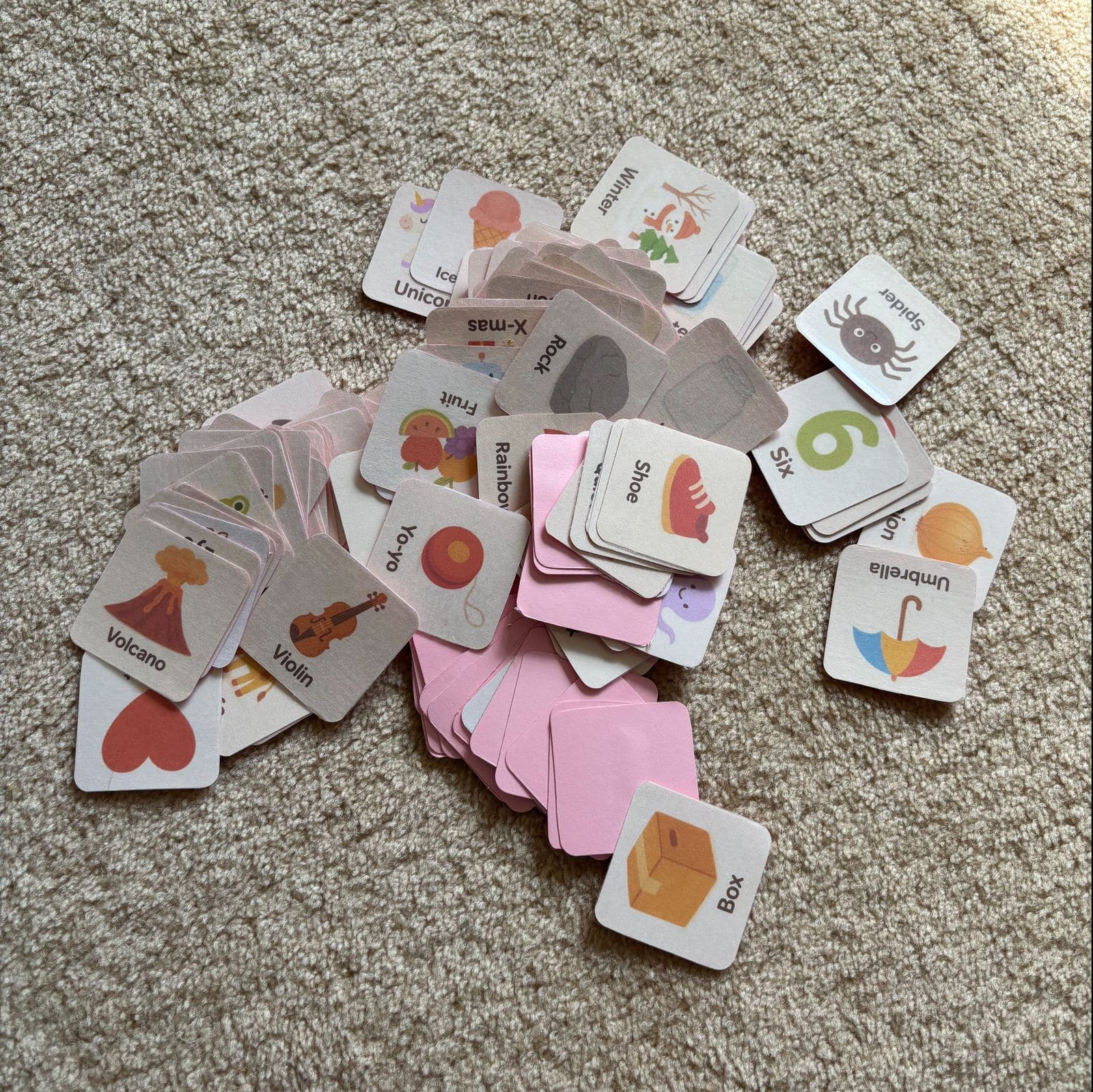
The 104 word cards were finished first. While PeNnY wrestled with code and scripts, I couldn't bear to let those lovely images just sit on a screen — so I decided to make a physical set. I printed them small enough to fit in a child's hand, backed each one with coloured card to stop the image showing through, laminated them by hand to protect against water damage, trimmed them with a paper cutter, and rounded every corner with a corner punch so small fingers wouldn't get scratched or cut. Then I made a second set, so we could play memory games. Thanks to Mummy's little helpers — aka the big sisters.
Seeing Jin's Delight
When the cards were ready and we showed them to Jin, she was delighted. She seemed drawn to the soft, crayon-like illustrations, flipping through to find her favourite words. We tried going through them like flashcards, and it turned out she already knew forty to fifty of them.
Playing and Learning Together
We kept the card sets within arm's reach and played with them in every way we could think of — flashcards, memory matching, sorting by category, word chains. Sometimes with Mum, sometimes with her sisters. And just as Jin was beginning to tire of playing the same kinds of games with the same set of cards, she took things in a direction none of us expected.
Read More: The App We Dreamt Of
한국어 요약
Jin에게 맞는 방법을 찾던 중, AI의 발전을 흥미롭게 지켜보던 PeNnY가 Jin만을 위한 앱을 만들어 보자고 했다. 인문계 출신 둘(주로 한 명)의 겁 없는 앱 개발 모험은 그렇게 시작됐다. 첫 계획은 단순한 단어 학습 앱이었다. 알파벳마다 네 단어를 골라 Jin이 좋아할 그림체로 AI 이미지를 만들어 단어 카드를 만들었다.
104장의 카드가 먼저 완성됐다. PeNnY가 코드와 씨름하는 동안, 나는 그 예쁜 그림을 화면에만 두기 아까워 실물 카드를 만들었다. 아이 손에 쏙 들어오게 작게 인쇄하고, 비치지 않게 색지를 덧대고, 물에 젖지 않게 손으로 코팅하고, 재단기로 자르고, 작은 손가락이 긁히지 않게 모서리마다 둥글게 펀칭했다. 메모리 게임을 하려고 한 벌을 더 만들었다. 언니들이 든든한 조수였다.
카드를 받은 Jin은 무척 좋아했다. 크레용 같은 부드러운 그림에 끌려 좋아하는 단어를 찾아 넘겨 봤고, 플래시카드처럼 넘겨 보니 이미 40~50개는 알고 있었다. 우리는 카드를 손 닿는 곳에 두고 플래시카드, 짝 맞추기, 분류하기, 끝말잇기로 온갖 방법으로 놀았다. 같은 놀이에 Jin이 슬슬 지루해할 무렵, Jin은 아무도 예상하지 못한 방향으로 놀이를 끌고 갔다.

Yussi
Writer · Social work student, Massey University
A mother of three girls and a Korean immigrant making Mairangi Bay home — writing about starting school, home learning and everyday life on Auckland's North Shore.
More about Yussi →Frequently asked questions
- How do you make durable picture word cards for young children?
- Print them small enough to fit in a child's hand, back each one with coloured card so the image doesn't show through, laminate them to protect against water, trim them with a paper cutter, and round every corner with a corner punch so small fingers don't get scratched.
- How many word cards should you make for learning the alphabet?
- We chose four words for each letter of the alphabet — 104 cards in total — and made a second set so we could play memory games.
- What games can you play with picture word cards?
- Flashcards, memory matching, sorting by category and word chains — with Mum or with her sisters. And just as Jin began to tire of the same games, she took things in a direction none of us expected.
Join the conversation
Comments
Loading comments...
From our family · StoryPress
Every child has a story. Let them write it.
A five-year-old's daily sentence, growing word by word.
Join the Waitlist →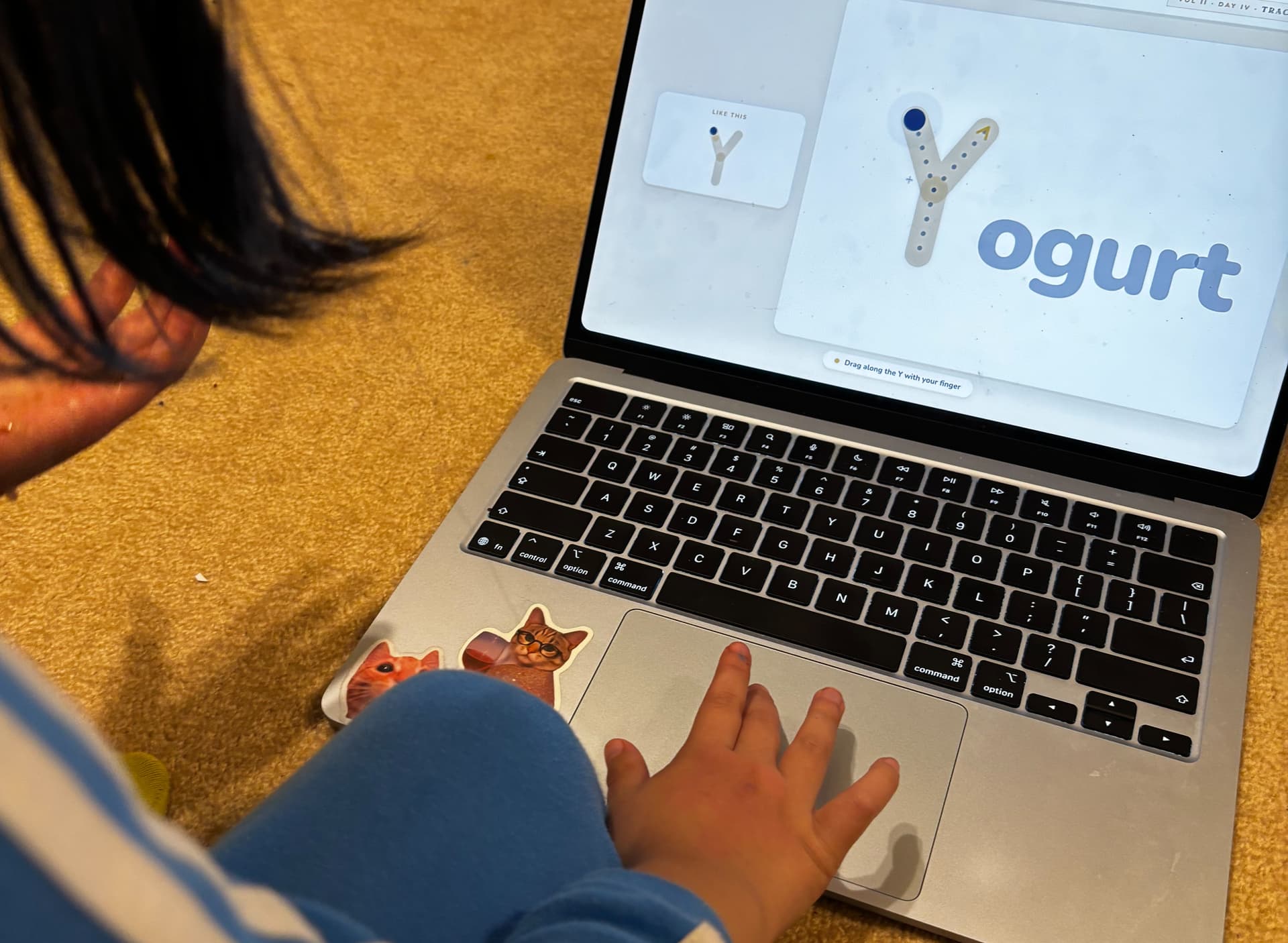
![[Y1] 100 Days of School](/_next/image?url=https%3A%2F%2Fvpayqdatpqajsmalpfmq.supabase.co%2Fstorage%2Fv1%2Fobject%2Fpublic%2Fimages%2Fblogs%2F1784846003918.jpg&w=1920&q=75)