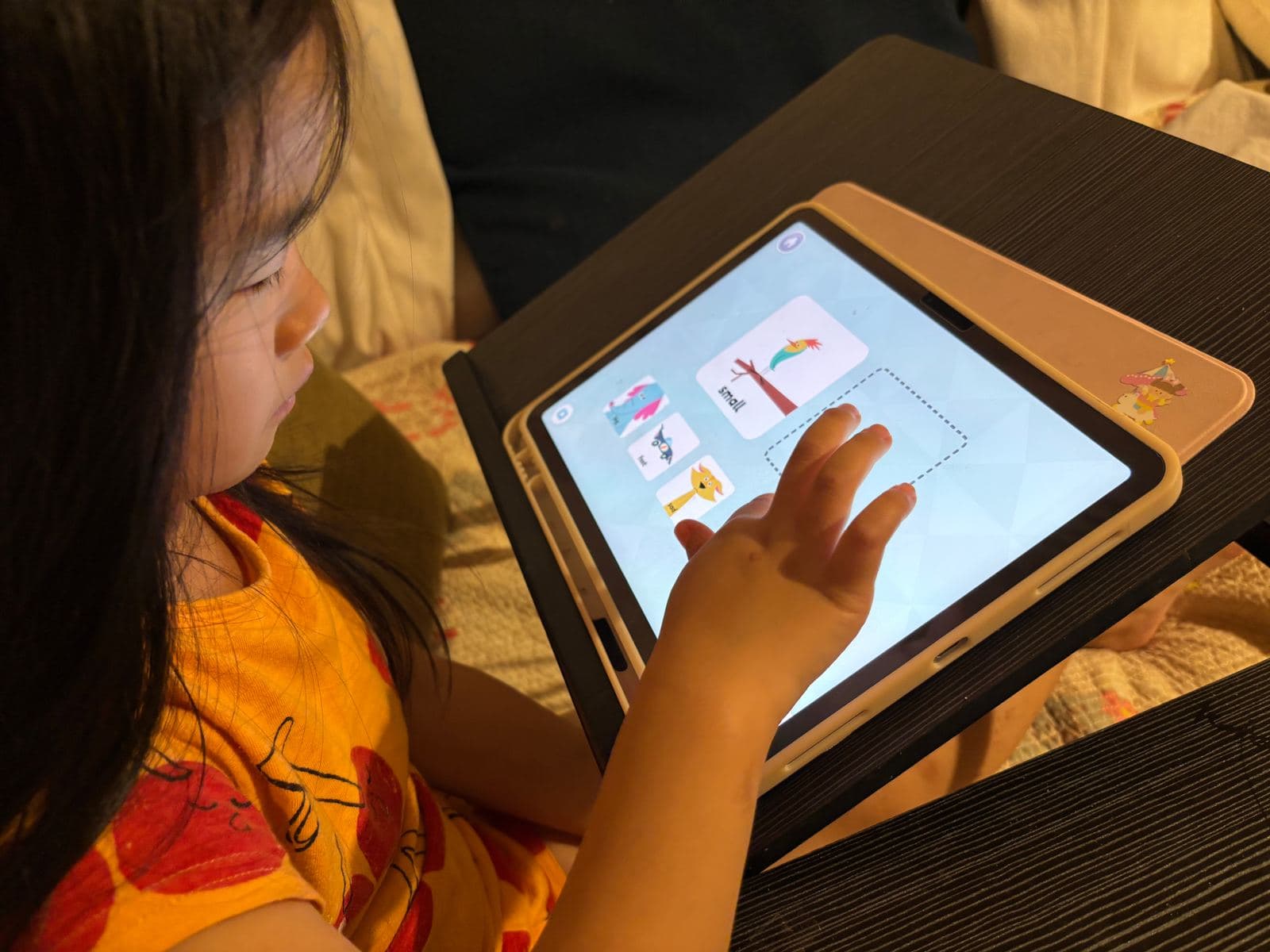
The long break gave us plenty of time — or so it seemed. We'd taught all three girls Korean literacy at home with workbooks and hands-on activities, so learning around the kitchen table wasn't new to us. But English was different. Finding the right tools for our child was the challenge from the start. We tried everything we could, searching for a way in that Jin would accept without resistance.
Diving into Books and Reading
Screen. We tried child-friendly programmes in English — Numberblocks was new to her and caught her interest early on, but she'd already been watching Disney Junior and Netflix series for a while. Educational content couldn't compete. She got bored quickly.
Books. We read to her in both Korean and English, mixing levels and genres. But the books Jin kept bringing back were always Korean picture books. English books at her reading level were too simple to hold her attention, and the ones with stories she'd enjoy were too advanced for her to follow. At that age she was deep in the phase of hunting for tiny hidden details in illustrations, picking up on sound cues and visual jokes — the kind of reading that demands you understand every word. English picture books couldn't give her that, so she mostly just looked at the pictures.
Worksheets and Learning Apps
The library. The English books she did bring home were almost always ones she'd picked out herself at the library, where English titles far outnumber Korean ones. She'd gravitate toward characters she already loved — unicorns, princesses, Bluey, Peppa, Doggy. But whenever she found a book she truly wanted to own, it was always a Korean one.
Worksheets. We'd brought several sets of English and Korean workbooks when we moved to New Zealand — phonics, sight words, alphabet tracing, a Todoenglish set. But most of the English materials were black-and-white tracing and colouring exercises. Compared to the Korean workbooks she was used to — full-colour, packed with stickers, mazes, spot-the-difference puzzles, word searches, and crosswords — they simply couldn't hold her interest. The locally available options weren't much better.
What We Learned Along the Way
Apps. As digital natives, our girls treat the iPad like any other toy. We installed a few English learning apps and tried them together, and soon Jin was opening them on her own, treating them like games. But she couldn't understand the instructions, so she'd tap randomly until she landed on the right answer by chance. When she found something easy and game-like, she'd cling to it. When that got old, she seemed to view the apps as a gate she had to pass through to get to YouTube — and once she realised that wasn't the deal, she lost interest altogether.
None of this was wasted. Trying everything is how you learn what to keep and what to let go. We still take her to the library and read whatever she picks. We still pull out Where's Waldo-style English books and spend ages with our heads together, searching and chattering. When I read out something she needs to find, she asks what the word means — and that's vocabulary building, right there. She revisits phonics from her worksheets and practises what she's been learning. When Mum and her sisters do their daily Duolingo, she joins in with her own phonics app. And watching English-language shows has become much easier now, as long as there's no Korean dub available.
Not a single minute of any of it was wasted.
Read More: So We Made Our Own

Yussi
Writer · Social work student, Massey University
A mother of three girls and a Korean immigrant making Mairangi Bay home — writing about starting school, home learning and everyday life on Auckland's North Shore.
More about Yussi →Join the conversation
Comments
Loading comments...
From our family · StoryPress
Every child has a story. Let them write it.
A five-year-old's daily sentence, growing word by word.
Join the Waitlist →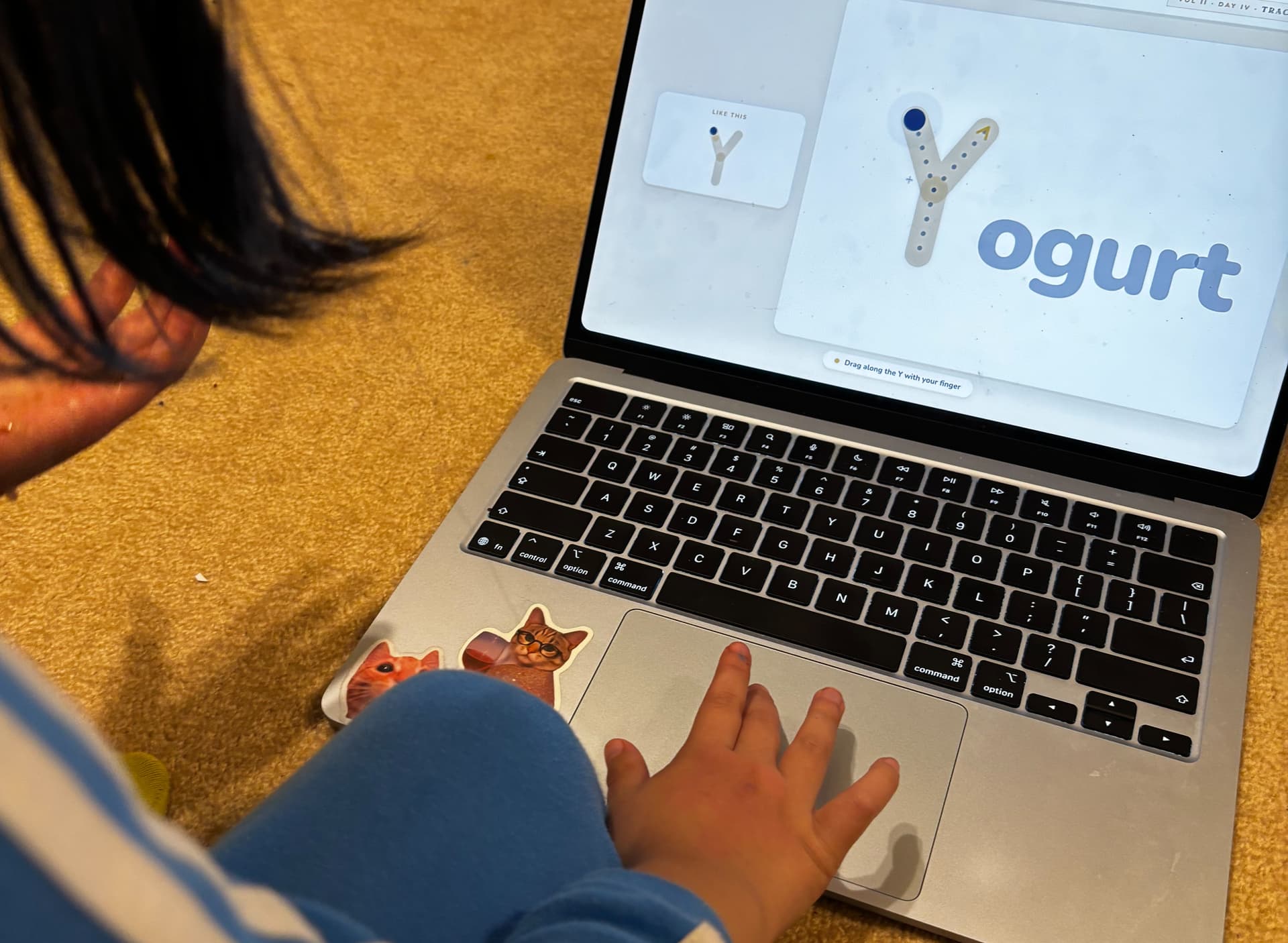
![[Y1] 100 Days of School](/_next/image?url=https%3A%2F%2Fvpayqdatpqajsmalpfmq.supabase.co%2Fstorage%2Fv1%2Fobject%2Fpublic%2Fimages%2Fblogs%2F1784846003918.jpg&w=1920&q=75)