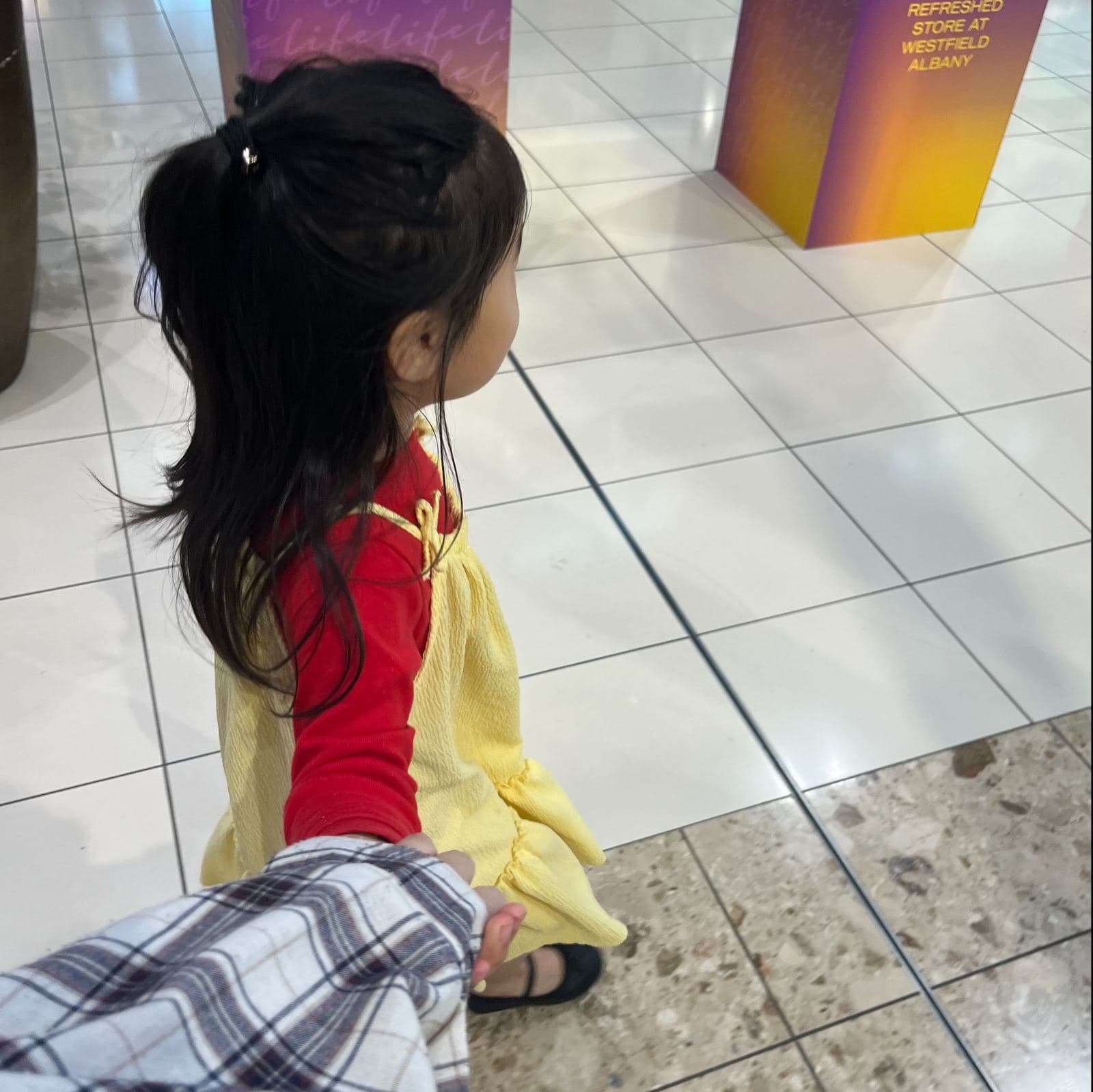
In October, our youngest left kindy. School wouldn't start until March — still five months away — and people were puzzled. Wasn't this the age for socialising, for settling into a routine before the classroom? We understood the concern, yet we had our reasons.
Jin was born when the world was holding its breath. Before her hundredth day, she was already in the pram trailing her oldest sister's school run and her second sister's kindy bus, multiple trips a day, rain or shine. Every time a case appeared at school or kindy, a baby was dragged along for testing, crying through every swab. When the fourth case came through, we pulled our middle daughter out of kindergarten altogether.
We stayed home for a long time. With no playgrounds open, the children's energy spilled into the evenings and bedtimes crept later. Her older sisters had once been asleep by eight, but Jin — younger than either of them had been — lay awake past nine in a bright, noisy house. When she went to bed early, she felt sad at the sound of her sisters still playing. Not from tiredness. From the sting of being left out.
A life of tagging along
After lockdowns lifted, the pattern held. Outings followed the older two. Jin was home with Mum or strapped into the pram, tagging along. She lived between "you're not old enough" and "you can't do that yet." Still, our sturdy little one followed her sisters everywhere, grinning. We thought about it. Both older girls had been given something Jin hadn't — time at the centre of a parent's world(Both of them did. We were lucky in that).
Our only child plan
In an ordinary time, she would have had it too. While her sisters were out at school and kindy, she'd have had Mum to herself for three or four hours a day, without anyone planning it. But it never happened. No matter how much her sisters doted on her, no matter how thoroughly she wielded her cuteness as a weapon of absolute power, she had never once been at the centre of anyone's time.
My husband calls it "playing only child." So she can play only child — for just five months in her early life — that was all we had before all three girls would leave at nine and come home at three, everything shared again. That was everything we had to work with.
Read More: First Term Report
한국어 요약
10월, 막내가 킨디를 그만뒀다. 학교는 3월에야 시작하니 다섯 달이나 남았다. 사람들은 의아해했다. 학교에 가기 전에 사회성을 기르고 생활 리듬을 익힐 나이 아니냐고. 그 걱정도 이해했지만 우리에게는 이유가 있었다.
Jin은 온 세상이 숨죽이던 시기에 태어났다. 백일도 되기 전부터 유모차에 실려 큰언니 등교와 작은언니 킨디 버스를 하루에도 몇 번씩 따라다녔다. 학교나 킨디에 확진자가 나올 때마다 아기도 끌려가 검사를 받으며 울었다. 봉쇄가 풀린 뒤에도 외출은 언니들 일정을 따라갔고, Jin은 늘 "아직 어려서 안 돼" 사이에서 살았다. 그래도 튼튼한 막내는 웃으며 언니들을 어디든 따라다녔다. 생각해 보니 두 언니에게는 있었지만 Jin에게는 없던 것이 있었다. 부모의 세상 한가운데에 있는 시간이었다.
평범한 때였다면 Jin도 그 시간을 가졌을 것이다. 언니들이 학교와 킨디에 가 있는 동안 하루 서너 시간씩 엄마를 독차지했을 테니. 하지만 그런 일은 한 번도 없었다. 남편은 그걸 "외동 놀이"라고 부른다. 세 아이가 모두 아홉 시에 나가 세 시에 돌아와 모든 것을 다시 나눠 쓰기 전, 어린 시절 단 다섯 달만이라도 외동처럼 지내게 해 주고 싶었다. 그게 우리가 가진 전부였다.

Yussi
Writer · Social work student, Massey University
A mother of three girls and a Korean immigrant making Mairangi Bay home — writing about starting school, home learning and everyday life on Auckland's North Shore.
More about Yussi →Frequently asked questions
- Why does one-on-one time matter for younger siblings?
- Total family time naturally decreases as families grow, and family routines tend to revolve around older children's fixed schedules. One study using the American Time Use Survey found that a first-born child receives 20–30 more minutes of quality time a day with a parent than a second-born child of the same age (Price, 2008).
- How much one-on-one time does a child need?
- It doesn't need to be long — as little as 10–15 minutes of focused, child-led time a day. No phone, no siblings competing for attention. Let the child lead and follow their curiosity.
- Why take a child out of kindy before school starts?
- For us it was about time. Jin had spent her early years tagging along to her sisters' schedules and had never once been at the centre of anyone's time. The five months before school were the last stretch she could have that before all three girls' days became shared again.
Join the conversation
Comments
Loading comments...
From our family · StoryPress
Every child has a story. Let them write it.
A five-year-old's daily sentence, growing word by word.
Join the Waitlist →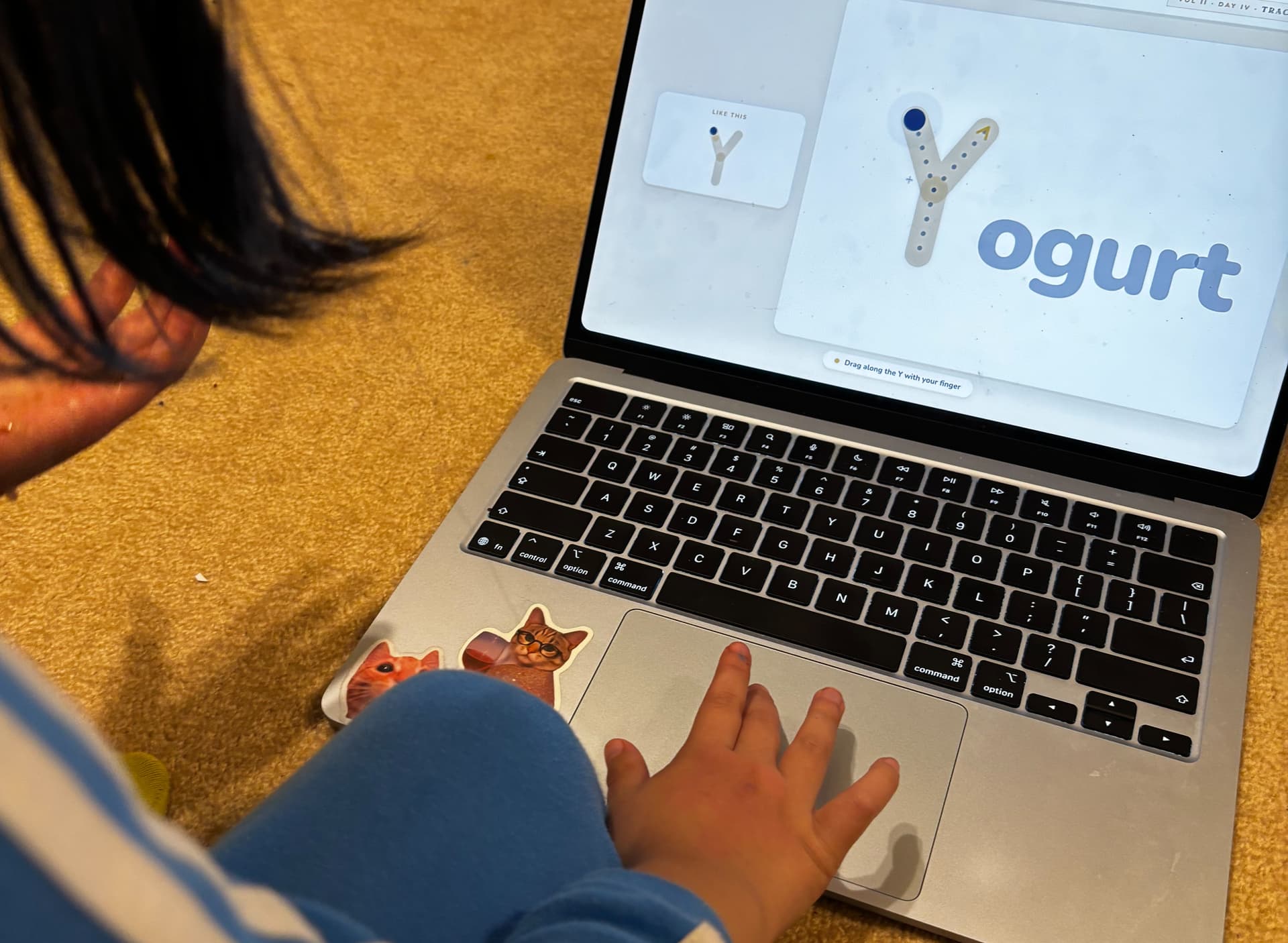
![[Y1] 100 Days of School](/_next/image?url=https%3A%2F%2Fvpayqdatpqajsmalpfmq.supabase.co%2Fstorage%2Fv1%2Fobject%2Fpublic%2Fimages%2Fblogs%2F1784846003918.jpg&w=1920&q=75)