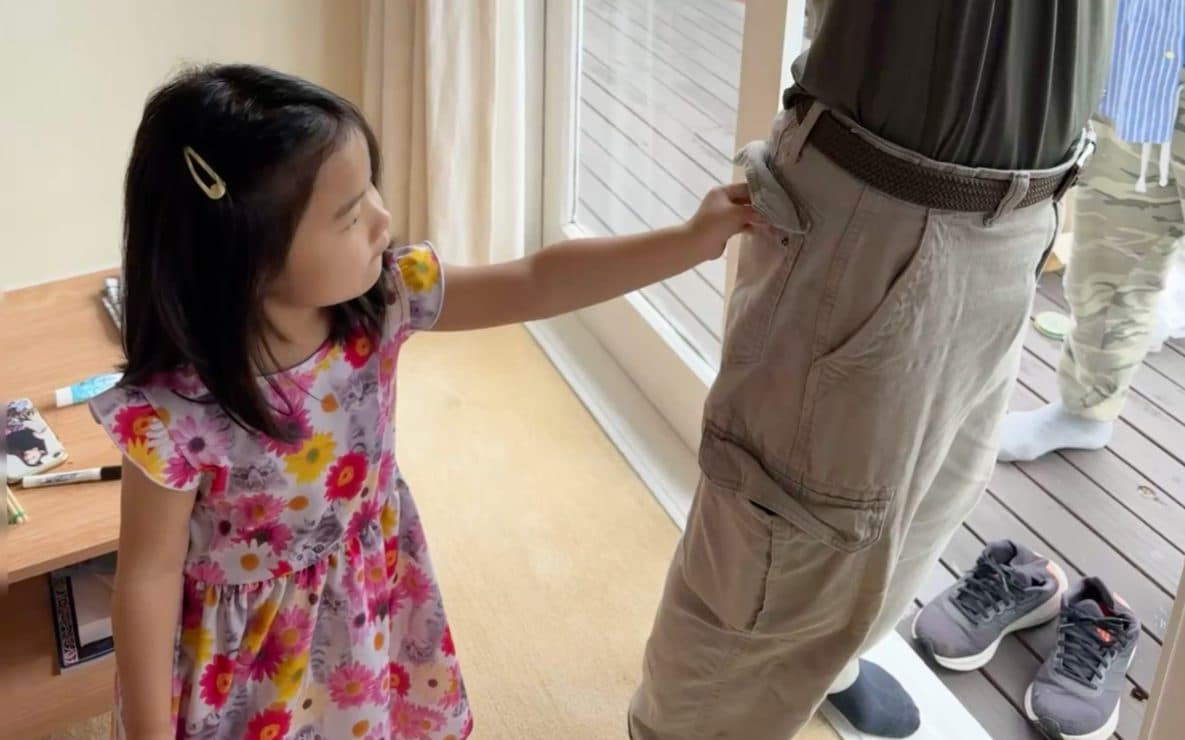
Jin was different from her sisters from the very beginning.
Min and Hyun were shy children — the kind who hid behind their mother's legs and needed a gentle push before they'd say hello to a stranger. Jin was the opposite. If someone smiled at her, she smiled right back, wide and unguarded. When she was still in her pushchair, she'd reach out her hands to neighbours walking through the apartment complex, and later toddled after them.
She was fearless with people — and careful with everything else. On the playground and stairs, she climbed each step deliberately, with every movement measured. But the moment she locked eyes with a stranger, all that caution vanished. In a family of introverts, she was our cheerful little mutation — the only one who seemed to run on extrovert fuel.
Her Fearless Little Spirit
As she grew, a little shyness crept in. But even then, it wasn't the kind where a child turns away and refuses to look. Jin would hide behind my back and peek out, one eye visible, observing curiously. It was playful, not fearful — a game she was running on her own terms.
But she was very late to talk. By the time she turned two, she wasn't forming sentences. She barely used single words. Relatives had opinions. Everyone had opinions. Yet she understood everything — complex instructions, multi-step requests, the lot. She'd hear an unfamiliar word and repeat it back perfectly on the first try. Probiotics. Just like that, and she never repeated the word even though I asked her to.
When Her Words Emerged
We weren't worried. She was storing it all up. And just past her second birthday, words she'd been collecting quietly for months came tumbling out.
The Move to Aotearoa
By the time she was three — Korean age four — we started introducing Hangul and a little piano, the same way we had with her older sisters. But Jin was a free spirit. Structured learning wasn't her thing. She'd engage when she felt like it and wander off when she didn't. So we set up the environment and stepped back, letting her come to it in her own time.
That was the child who landed in New Zealand — curious, social, stubborn in the best possible way. Her new home was a country where the words around her were no longer words; where the faces were unfamiliar and the people, kind as they were, couldn't understand what she was saying.
Read More: I Want to Go Back
한국어 요약
Jin은 처음부터 언니들과 달랐다. Min과 Hyun이 엄마 다리 뒤에 숨는 아이들이었다면, Jin은 유모차에 앉아서도 지나가는 이웃에게 손을 내미는 아이였다. 사람 앞에서는 겁이 없었고, 놀이터 계단 앞에서는 한 칸 한 칸 신중했다.
말은 많이 늦었다. 두 돌이 되도록 문장은커녕 단어도 거의 쓰지 않았지만, 복잡한 말을 다 알아들었고 처음 듣는 단어를 한 번에 따라 하기도 했다. 우리는 걱정하지 않았다. 두 돌이 막 지나자 몇 달 동안 조용히 모아 둔 말들이 한꺼번에 쏟아져 나왔다.
세 살 무렵 언니들처럼 한글과 피아노를 시작했지만, Jin은 정해진 틀보다 제 속도를 따르는 아이였다. 그래서 환경만 만들어 두고 한 걸음 물러섰다. 그렇게 호기심 많고 사람을 좋아하고 고집도 있는 아이가, 들리는 말이 더 이상 말이 아닌 나라 뉴질랜드에 도착했다.

Yussi
Writer · Social work student, Massey University
A mother of three girls and a Korean immigrant making Mairangi Bay home — writing about starting school, home learning and everyday life on Auckland's North Shore.
More about Yussi →Frequently asked questions
- Is it normal for a two-year-old to understand everything but barely talk?
- That was Jin at two — no sentences and barely any single words, yet she followed complex, multi-step instructions and could repeat an unfamiliar word perfectly on the first try. Just past her second birthday, the words she had been quietly collecting came tumbling out.
- What is the "silent period" when a child starts learning a new language?
- When children first meet a new language, many go quiet. They are listening, absorbing and building comprehension before they speak. It can last anywhere from a few weeks to six months, and it is completely normal.
- How long does it take a child to learn English after moving to New Zealand?
- Most children develop everyday spoken English within about two years. The language needed for classroom learning — following instructions, reading, writing — takes much longer, around five to seven years on average.
Join the conversation
Comments
Loading comments...
From our family · StoryPress
Every child has a story. Let them write it.
A five-year-old's daily sentence, growing word by word.
Join the Waitlist →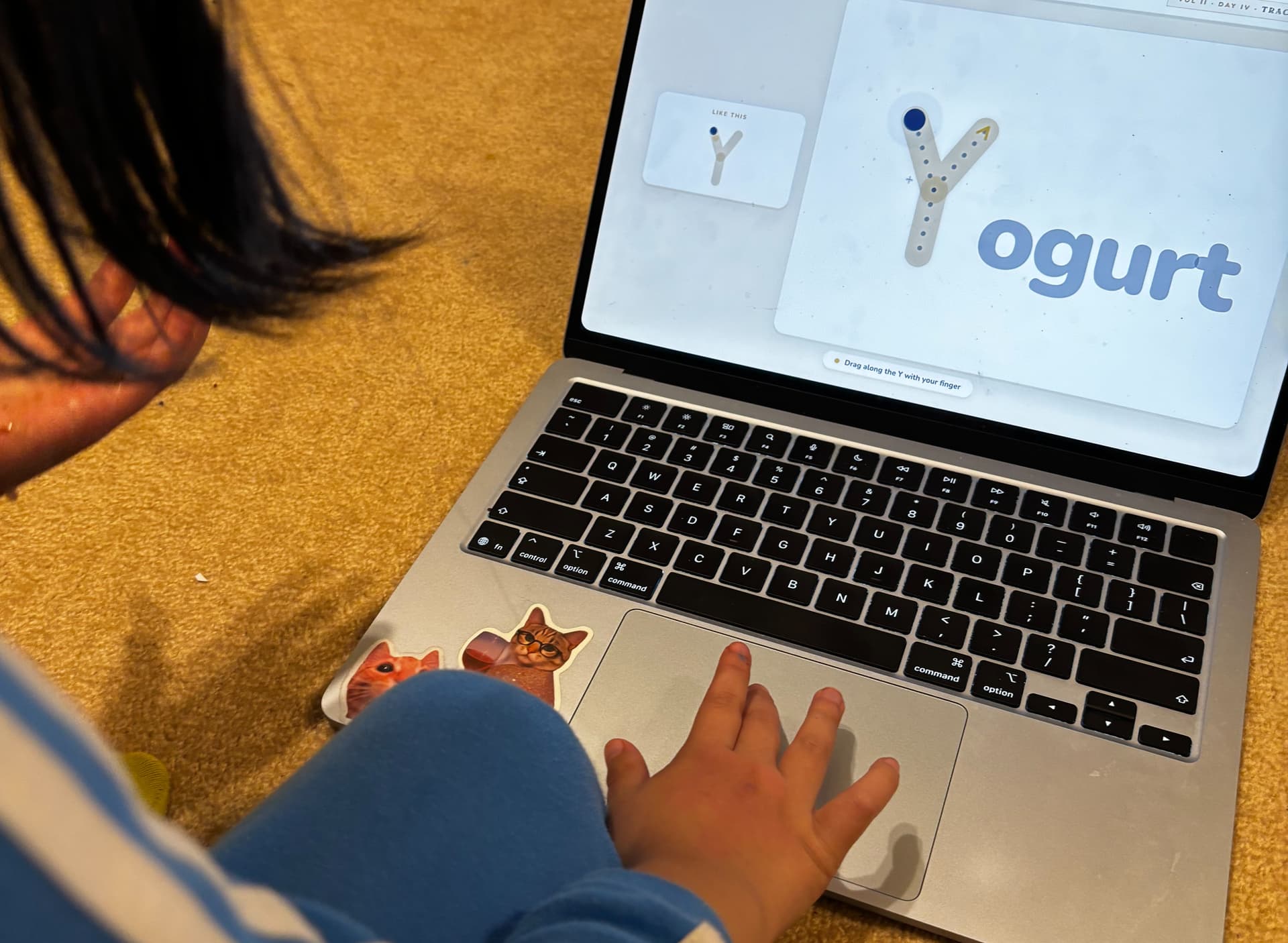
![[Y1] 100 Days of School](/_next/image?url=https%3A%2F%2Fvpayqdatpqajsmalpfmq.supabase.co%2Fstorage%2Fv1%2Fobject%2Fpublic%2Fimages%2Fblogs%2F1784846003918.jpg&w=1920&q=75)