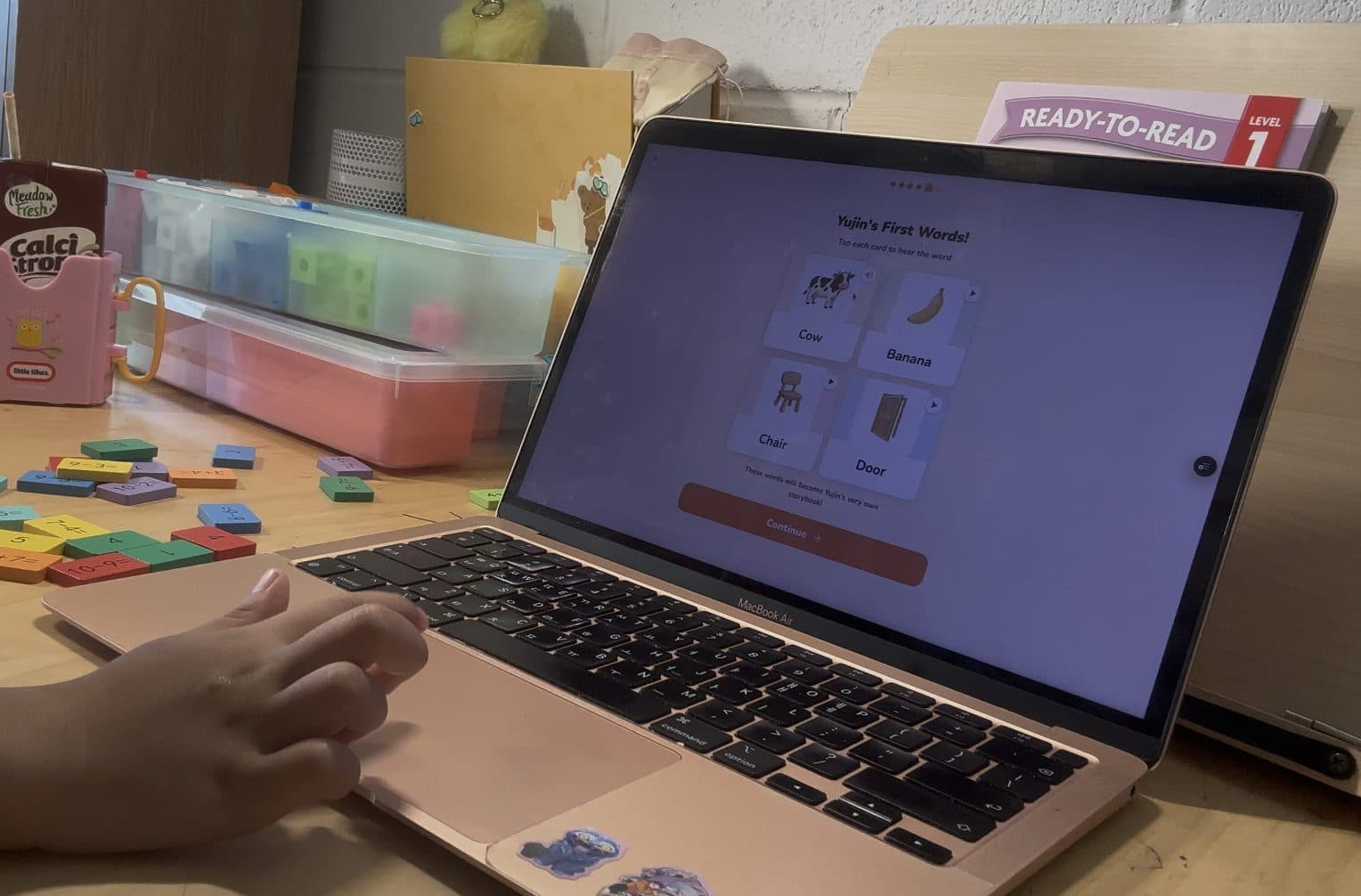
We didn't set out to build an app. We set out to spend a good few months with our daughter before school began — and somewhere in the middle of word cards and made-up stories about princesses and queens, we found ourselves asking: what if this could exist as something other families could use too?
Setting Our Screen Time Limits
We knew exactly what we didn't want. We'd seen what happened when screen time had no natural end point — the begging for one more level, the glazed eyes, the way the rest of the afternoon felt a little flatter. We didn't want to build something that pulled children in and didn't let go. We wanted something that did its job and then sent them back to the world.
So we gave ourselves a limit: fifteen minutes a day. That's it.
How Learning Comes to Life
Each day, four new words. A bit of phonics, a memory game, a sound-match, a simple crossword — enough to make the learning stick without it feeling like study. And then, the part our daughter had shown us mattered most: a story.
Not a story we wrote for them. A story they help create. Children choose their genre, make decisions at key moments, and watch as the words they've just learned find their way into a narrative that's entirely their own. Every day, a new page. Every page, an illustration — ready to colour in, on screen or printed out. And when the story is complete, it becomes a book. A real one, that they made.
We thought about that afternoon with the princess card a lot while we were building this. The way she hadn't noticed she was learning because she was too busy telling a story. The way the words became hers the moment she put them to use.
Learning Beyond the Screen
At the end of each daily session, our character Jini waves goodbye and says: I wonder what happens next in your story — see you tomorrow! And then the app closes. What the child does with those four words for the rest of the day — what they dream, what they imagine, what they whisper to their toys — that part is up to them.
Read More: What We Tried — Nothing Quite Fit
한국어 요약
앱을 만들려고 시작한 일이 아니었다. 입학 전 몇 달을 막내와 잘 보내려 했을 뿐인데, 단어 카드와 공주·여왕이 나오는 지어낸 이야기들 사이에서 어느 순간 이런 질문이 생겼다. 이걸 다른 가족도 쓸 수 있는 무언가로 만들 수 있을까.
만들고 싶지 않은 것은 분명했다. 끝이 없는 화면 시간, 한 판만 더 하자는 조르기, 멍해진 눈. 그래서 스스로 한도를 정했다. 하루 15분, 그게 전부다. 매일 새 단어 네 개를 파닉스와 기억 게임, 소리 맞추기, 간단한 크로스워드로 익히고, 그다음이 가장 중요한 부분인 이야기다. 아이가 장르를 고르고 갈림길에서 결정을 내리면, 방금 배운 단어들이 아이만의 이야기 속으로 들어간다. 매일 한 쪽씩 색칠할 수 있는 그림이 생기고, 이야기가 끝나면 한 권의 책이 된다.
하루 분량이 끝나면 캐릭터 Jini가 손을 흔들며 내일 보자고 인사하고, 앱은 닫힌다. 그 네 단어로 남은 하루 동안 무엇을 상상하고 인형들에게 무엇을 속삭일지는 아이의 몫이다.

Yussi
Writer · Social work student, Massey University
A mother of three girls and a Korean immigrant making Mairangi Bay home — writing about starting school, home learning and everyday life on Auckland's North Shore.
More about Yussi →Frequently asked questions
- How long should a young child use a learning app each day?
- We gave ourselves a limit of fifteen minutes a day. Attention and retention drop sharply after 15–20 minutes in young children, and brief, daily repetition beats long, occasional sessions.
- What does a daily StoryPress session look like?
- Four new words each day, practised through a bit of phonics, a memory game, a sound-match and a simple crossword. Then the child helps create a story — choosing the genre and making decisions at key moments — and the words they have just learned find their way into it. Every day adds a new page with an illustration to colour in, and the finished story becomes a book.
- What should parents look for in a children's learning app?
- Three things: it should stop on its own, because a built-in ending point is a feature, not a limitation; it should give the child agency, such as choosing a story direction or genre; and it should extend off-screen, with printable pages, word cards or a take-home story.
Join the conversation
Comments
Loading comments...
From our family · StoryPress
Every child has a story. Let them write it.
A five-year-old's daily sentence, growing word by word.
Join the Waitlist →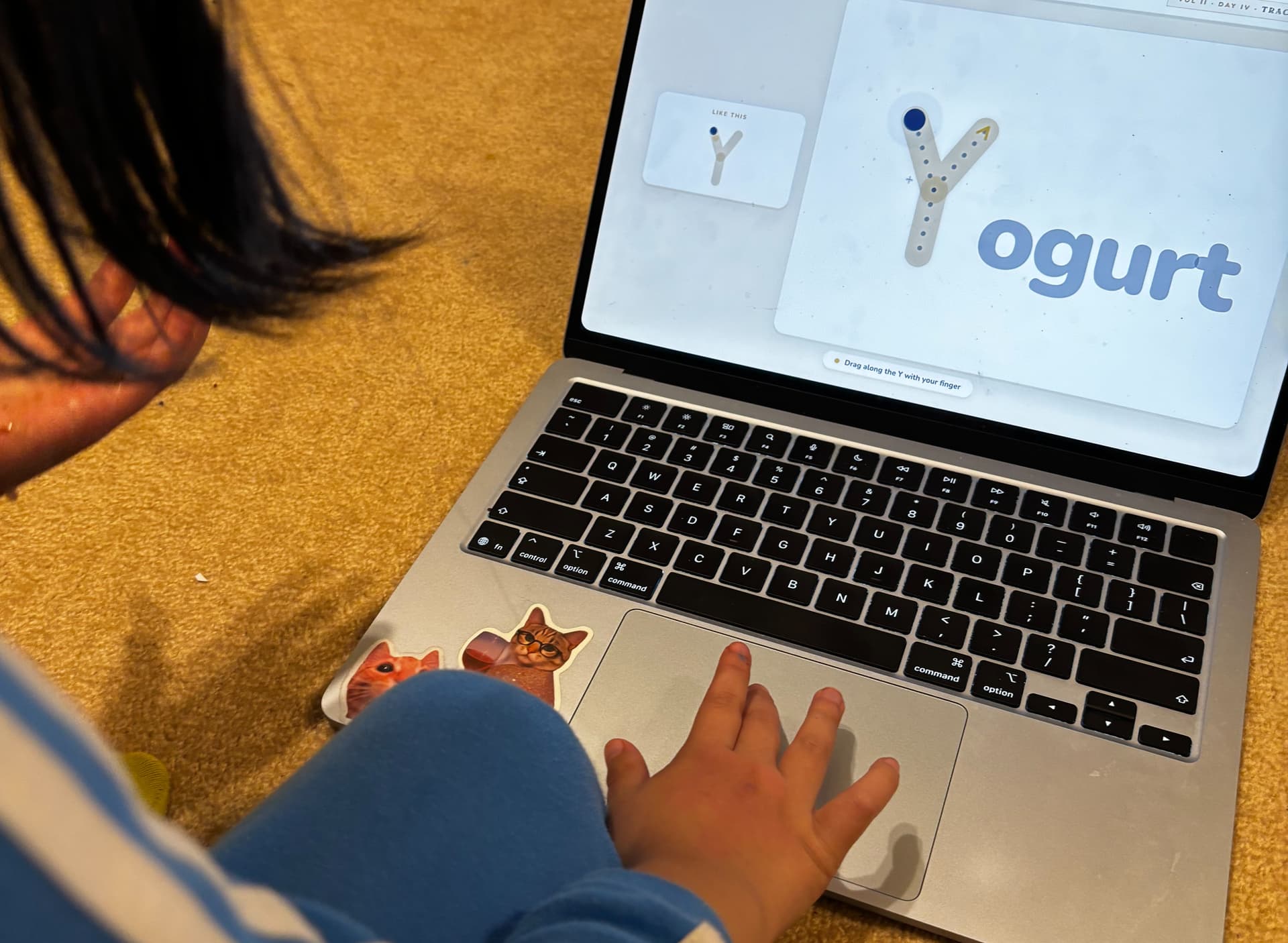
![[Y1] 100 Days of School](/_next/image?url=https%3A%2F%2Fvpayqdatpqajsmalpfmq.supabase.co%2Fstorage%2Fv1%2Fobject%2Fpublic%2Fimages%2Fblogs%2F1784846003918.jpg&w=1920&q=75)