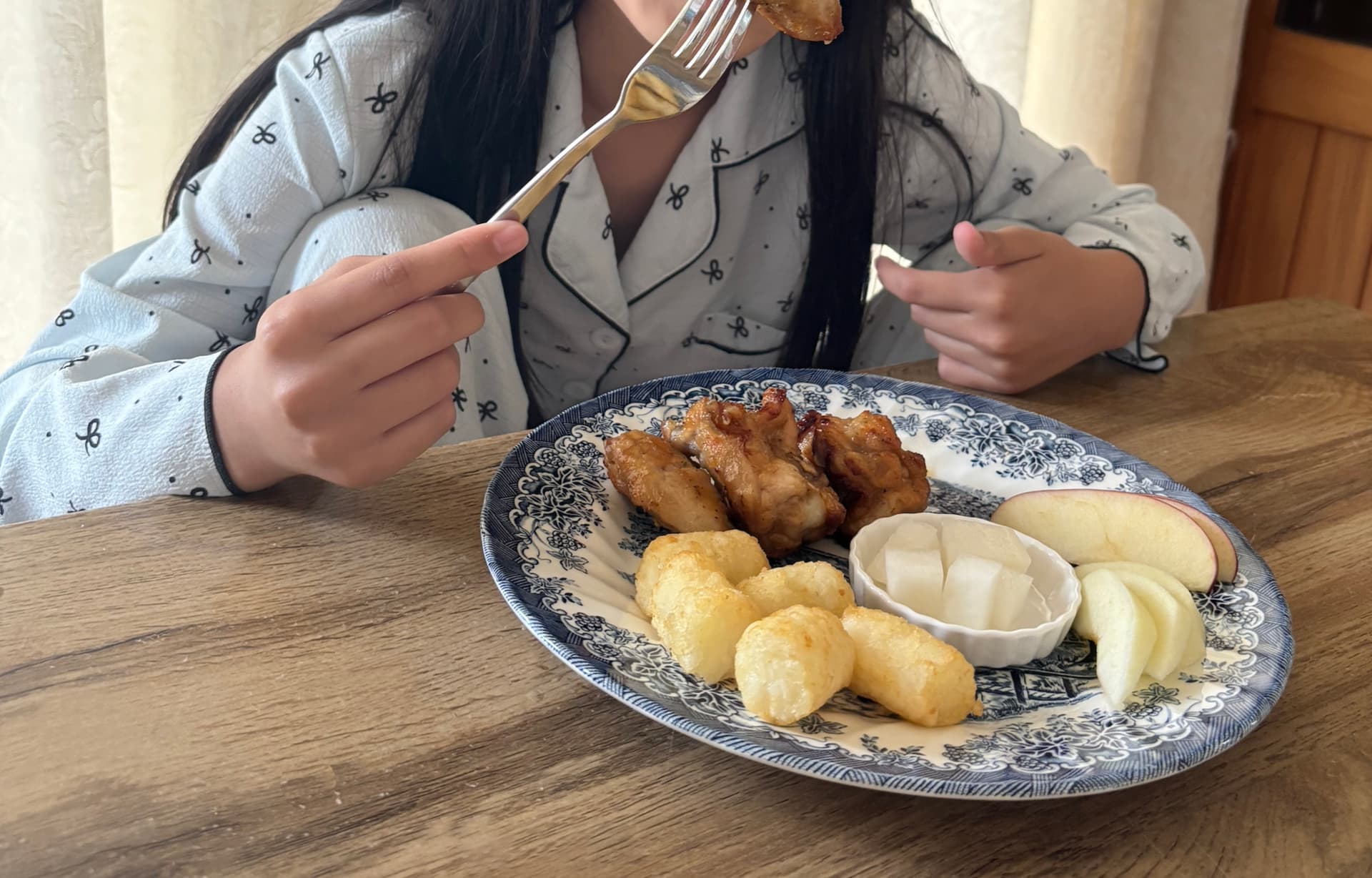
Our time together wasn't wasted — even if it didn't look much like learning.
After school, the five of us had a narrow window: three o'clock until bedtime, packed with homework, dinner, dishes, and whatever else the day had left over. Sitting side by side at a desk, working through books the way we might during the holidays — that wasn't going to happen. But the children were getting on with what they could manage on their own, steadily and without much fuss.
After Min's last parent-teacher meeting, I'd been turning over a particular problem. Her biggest challenge, the teacher said, was vocabulary — and Min has never been one for straight memorisation. Drilling word lists wasn't going to help her. I wasn't sure what would.
Then one evening, sitting around the dinner table, I tried something. Simple enough that Jin — who had just started learning her alphabet and phonics — could join in.
"Give me 5 words that start with E!"
The children blinked. A hint, then.
Keeping the Word Fun Going
"Hyun's favourite food." — EGG! "Hyun's favourite animal." — Elephant! "Something on your face." — Eye! Ear! "A purple vegetable — starts with the word we already found." — Eggplant!!!
Next: seven words ending in T. They hesitated.
"Meow," I said.
Cat! And then, almost automatically — Hat! Bat! Rat! Mat! — all three of them, falling over each other. We laughed. Min took her turn and raised the stakes: three words, starting with T, more than seven letters each. Temperature. Tornado. Treasure.
Why This Learning Worked
They learned while the dinner was still warm, while the plates were being cleared, while someone was negotiating a last bite of dessert. No preparation, no marking, no patience required. They set each other questions. Even the person asking often couldn't answer — so everyone would sit and think together.
Our home learning survived. Just not the way I'd planned it.
Read More: How Our Study Plan Fell Apart
한국어 요약
함께한 시간이 헛되지는 않았다. 공부처럼 보이지 않았을 뿐이다. 하교 뒤 세 시부터 잘 때까지는 숙제와 저녁, 설거지로 빽빽해서 책상에 나란히 앉아 책을 푸는 방학식 공부는 될 리가 없었다. Min의 지난 학부모 면담에서 선생님은 가장 큰 과제가 어휘라고 했다. Min은 단어 목록을 외우는 아이가 아니다. 무엇이 통할지 나도 몰랐다.
어느 저녁 식탁에서 하나 해 봤다. 알파벳과 파닉스를 막 시작한 Jin도 낄 수 있을 만큼 쉬운 것. "E로 시작하는 단어 다섯 개!" 아이들이 멈칫하면 힌트를 준다. Hyun이 좋아하는 음식은? Egg! 얼굴에 있는 것은? Eye! Ear! 다음은 T로 끝나는 단어 일곱 개. "야옹" 하고 힌트를 주자 Cat, Hat, Bat, Rat, Mat이 서로 앞다투어 쏟아졌다. Min은 판을 키워 T로 시작하고 일곱 글자가 넘는 단어 세 개를 냈다. Temperature, Tornado, Treasure.
저녁이 식기 전에, 접시를 치우는 사이에, 디저트 한 입을 두고 협상하는 동안 아이들은 배웠다. 준비도 채점도 인내심도 필요 없었다. 서로 문제를 냈고, 낸 사람도 답을 몰라 다 같이 생각했다. 우리 집 홈러닝은 살아남았다. 계획한 방식은 아니었지만.

Yussi
Writer · Social work student, Massey University
A mother of three girls and a Korean immigrant making Mairangi Bay home — writing about starting school, home learning and everyday life on Auckland's North Shore.
More about Yussi →Frequently asked questions
- What word games can you play with kids at the dinner table?
- The one that started it: "Give me five words that start with E" — with hints like "Hyun's favourite food" (egg) or "something on your face" (eye, ear). Then seven words ending in T, and Min's version: three words starting with T with more than seven letters. The guide at the bottom of the post adds I Spy, Who Am I? and Word Chain.
- How do you build vocabulary for a child who won't memorise word lists?
- Min's teacher said vocabulary was her biggest challenge, and drilling word lists wasn't going to help her. What worked was vocabulary in use, not vocabulary on a list — games where the children set each other questions and everyone thinks together.
- Which dinner-table word games work for mixed ages?
- I Spy works across all ages at the same table. Who Am I? and Word Chain work best when kids are old enough to hold the rules and young enough to find it genuinely exciting.
Join the conversation
Comments
Loading comments...
From our family · StoryPress
Every child has a story. Let them write it.
A five-year-old's daily sentence, growing word by word.
Join the Waitlist →
![[Y7] Kahu Manu (1) New way of learning](/_next/image?url=https%3A%2F%2Fvpayqdatpqajsmalpfmq.supabase.co%2Fstorage%2Fv1%2Fobject%2Fpublic%2Fimages%2Fblogs%2F1780228905567.png&w=1920&q=75)