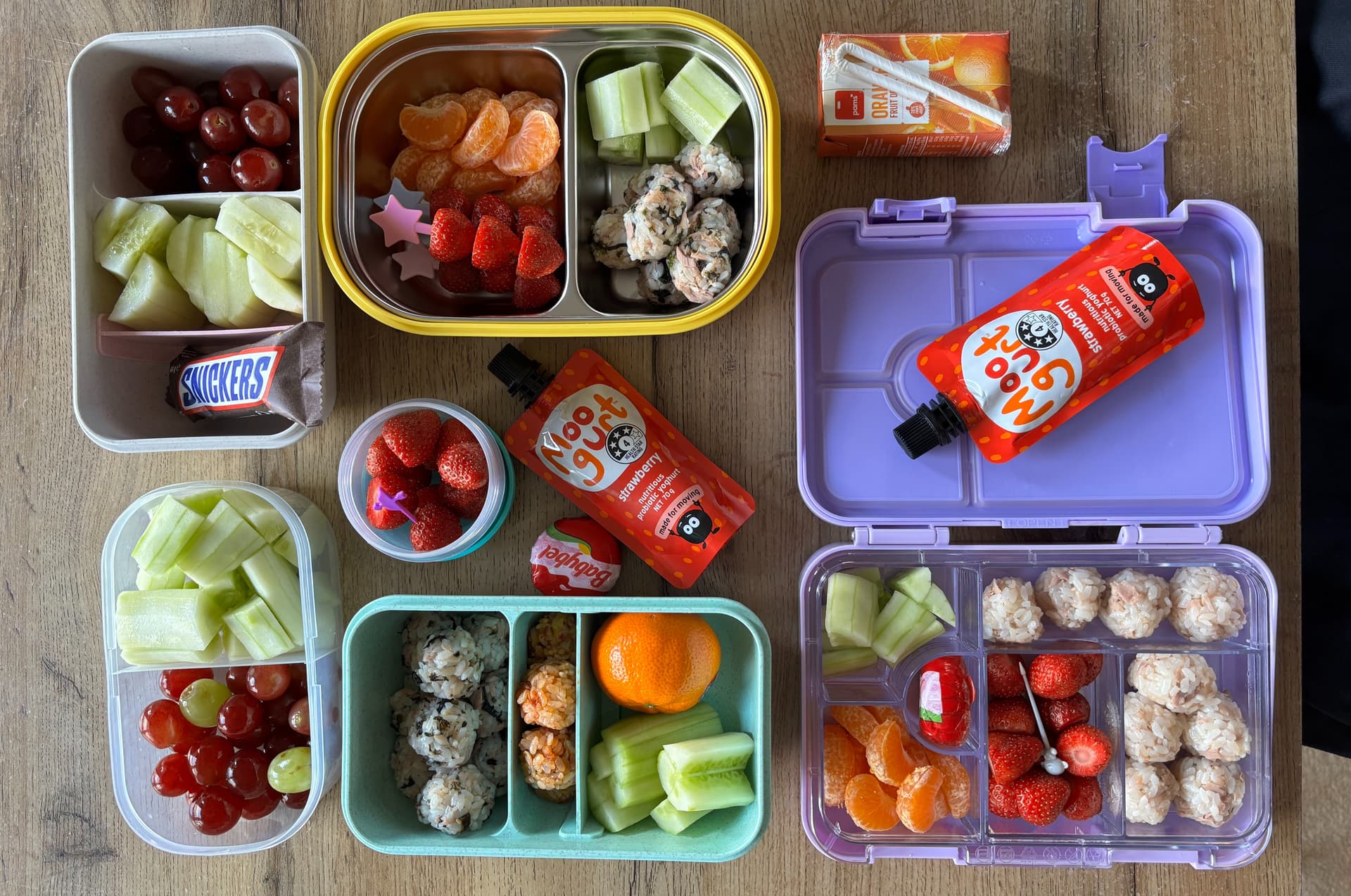
Leaving Korea —a land of heavenly school meals— for New Zealand, the very first hurdle of daily life I ran into was the lunchbox. With my youngest starting school this year, I now find myself preparing three lunches every morning, or even four when I have class of my own. Everyone's tastes are different, and the rules vary from school to school and year to year.
1. Brain food, morning tea, lunch
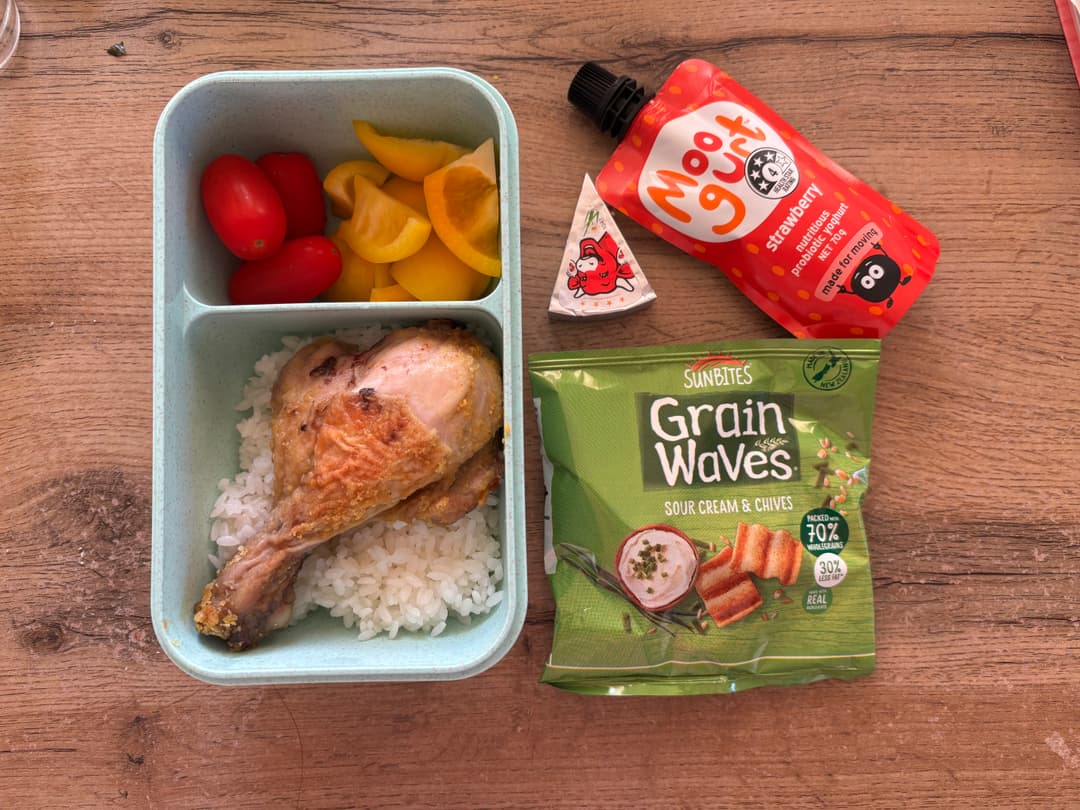
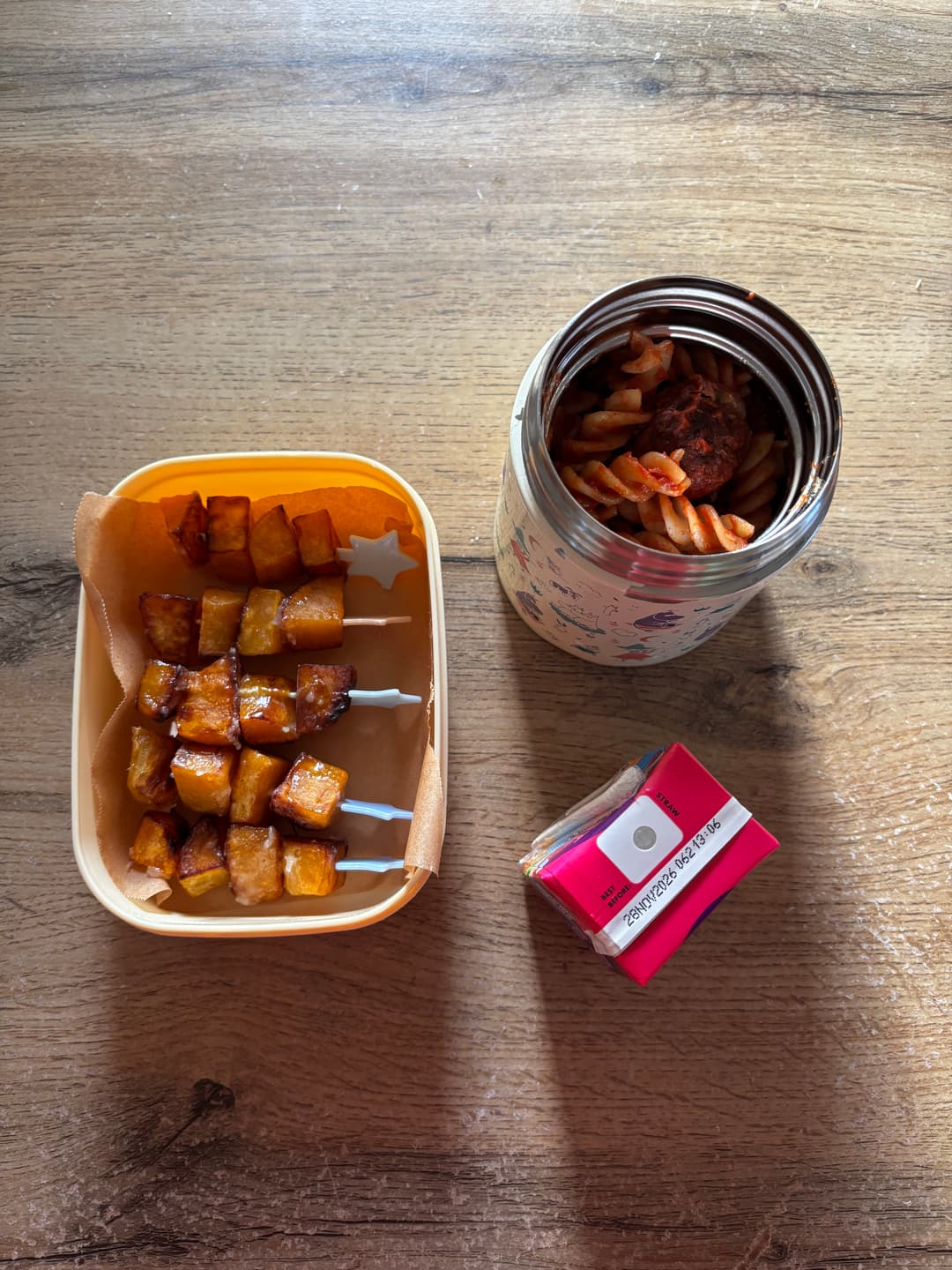
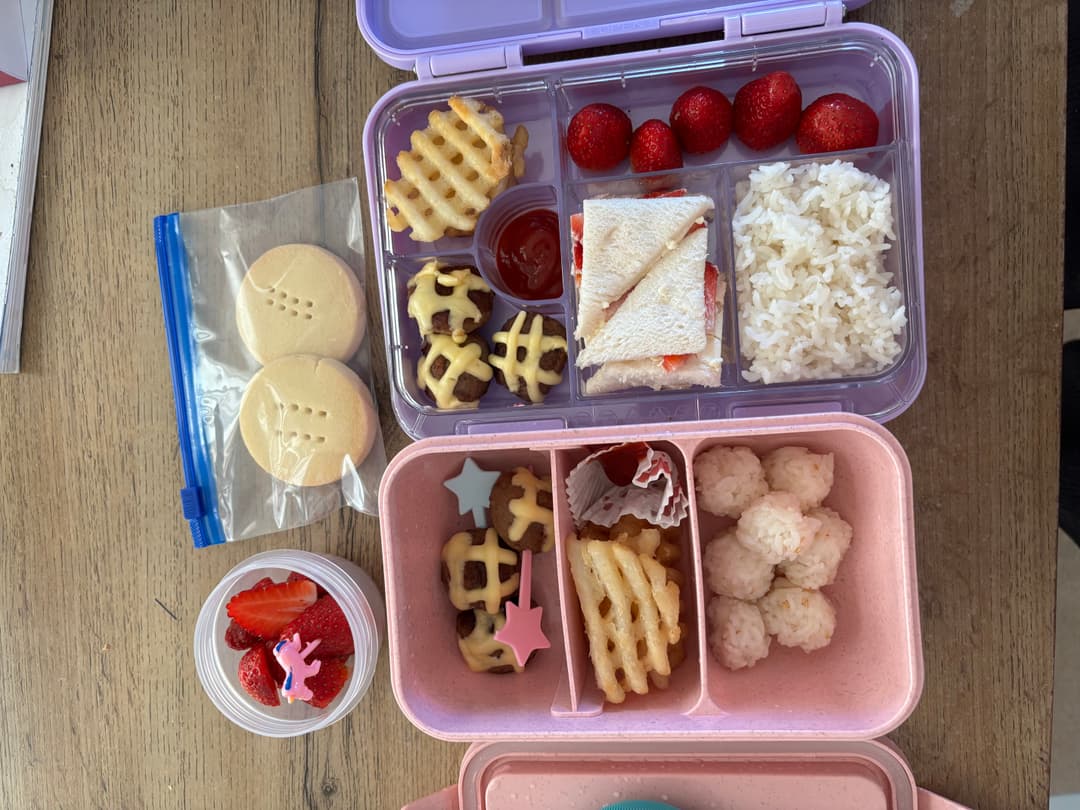
New Zealand children have three eating times at school each day. There's brain food — a small bite in the morning meant to wake the mind up — then morning tea to take the edge off before lunch, and finally lunch itself. Unlike Korea, where there are no snack breaks and lunch is a proper sit-down meal, children here tend to eat little and often, just enough that hunger doesn't get in the way of learning. For brain food we usually pack fruit or vegetables, for morning tea a simple snack, and for lunch something like bread or rice balls. Packing a bit of variety means the children can pace themselves, eating a little more or less depending on the time they have and how hungry they are.
2. Only 10 minutes to eat (primary only)
For primary-aged children, it's best to keep snacks and lunch as simple as you can. I used to find the "crackers and cheese" lunches I'd occasionally see on social media a bit puzzling — but once I learned that only 10 minutes of the 40-minute lunch break is for eating, and the rest is for play, it made complete sense. Morning tea is the same, with just 10 minutes to eat, so I prepare food the children can pick up easily with their hands and that's soft enough to eat quickly. Thankfully, from intermediate age — when appetites really pick up — there's no limit on lunchtime and things are far more relaxed, so Min always asks me to pack her plenty.
3. Pack simple: kids eat outside
Among the lunch gear we brought over from Korea is an insulated lunchbox. It keeps rice, soup, and a few side dishes warm in separate compartments, but sadly, only I use it myself. Children here eat their lunch outside the classroom rather than in it, so laying out an assortment of tubs and lids is awkward, and with such a short time to eat, even the seconds spent opening and closing them add up. From intermediate age you'll often see them gathered in little groups around the field or on the grass, but primary children eat close to the classroom, within a teacher's line of sight. It's usually the corridor outside the room or a bench — so children prefer a simple lunch they can balance on their knees.
4. Allergy alert: follow the instructions
New Zealand schools take allergies very seriously. If any child in the one or two classes that eat together has an allergy to something like nuts or eggs, foods containing that ingredient are banned outright — because for some children, even the ingredient in the air can trigger a reaction. It's the reason my eldest could sometimes pack bread with Nutella last year, while my second has never once been able to. Sharing food is strictly off-limits too, even with something as straightforward as an apple or grapes. Banning the act of sharing altogether is how they head off any accident before it happens.
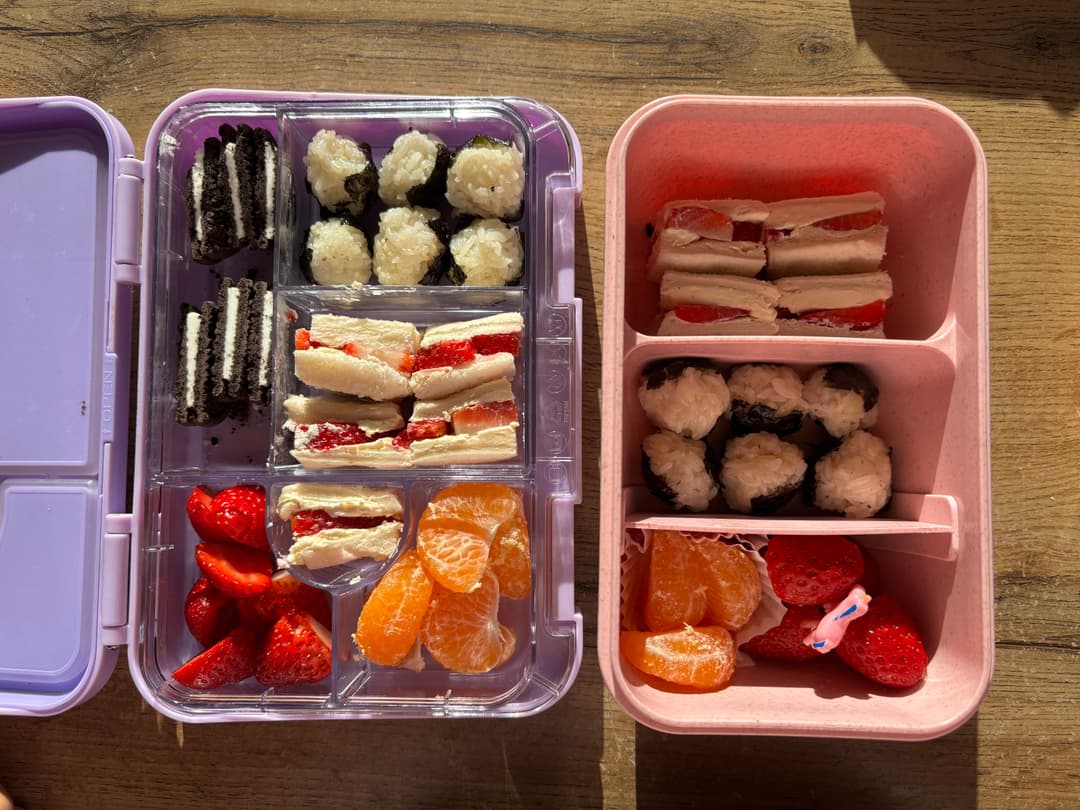
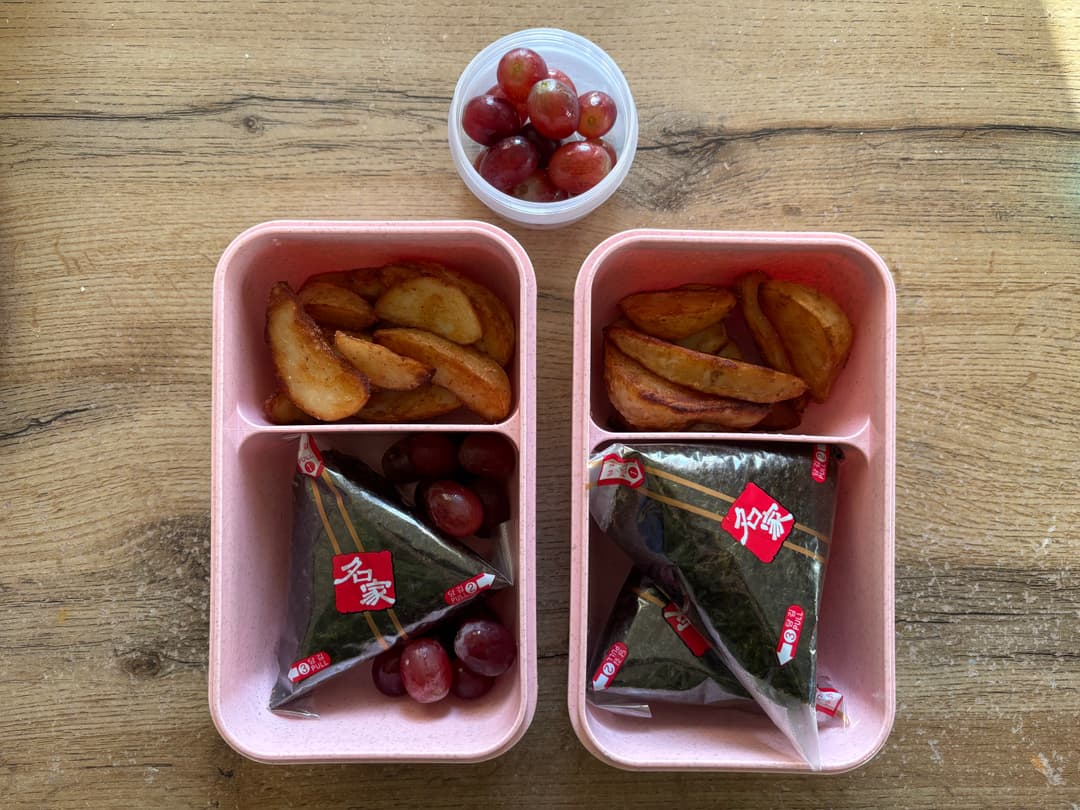
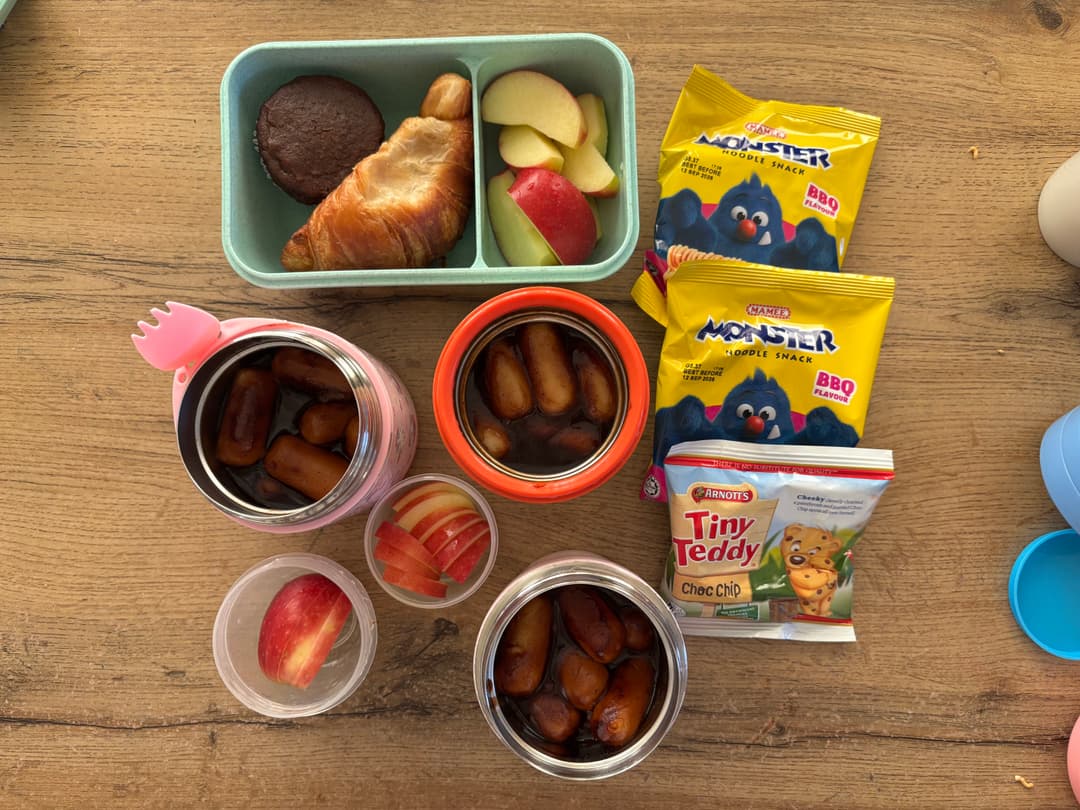
5. Fresh fruit and veggies, please
Lunches here may be simple, but schools still encourage at least one serving of fresh fruit or vegetables. With the Year 1 children especially, the teachers seem to keep a close eye on what's in the lunchbox. Not long ago I forgot to pack any fruit, and sure enough my little one came home that day and said, "There was no fruit in my lunch today! We have to put some in!" It was a sign the teachers are guiding them towards healthy eating. So I keep a steady supply of the fruit they all tend to like — apples, mandarins, grapes, strawberries, peaches. I'll cut up fresh cucumber, and capsicum for Min, and pop it straight in. Plenty of children bring carrot sticks, but mine can't stand carrots, so I do my best to pack the things they actually enjoy.
6. No sweets, no juice box
For morning tea, simple snacks like packet crisps, biscuits, popcorn, doughnuts, or muffins are allowed. We used to mostly buy multipacks portioned into small bags, and each morning I'd tuck one in. These days I keep a packet snack in as a backup, but I try to pack a slightly more filling morning tea — something easy to eat like potato wedges, matang (a sweet glazed kumara treat), or rice cake rolls. A chocolate biscuit is fine, but sweets like lollies and chocolate are not allowed. For drinks, too, water or a pouch of yoghurt is encouraged over sugary juice. Jin finds snack packets and yoghurt hard to open — so I snip the corner of the packet and loosen the yoghurt lid before closing it again.
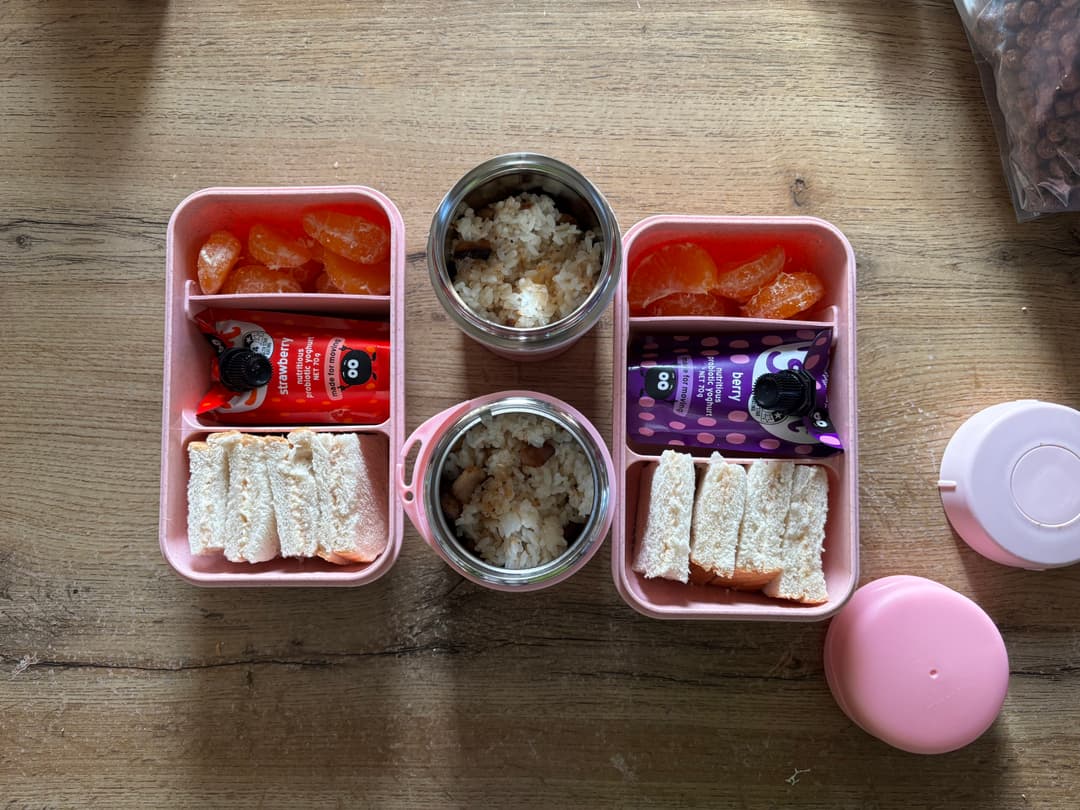
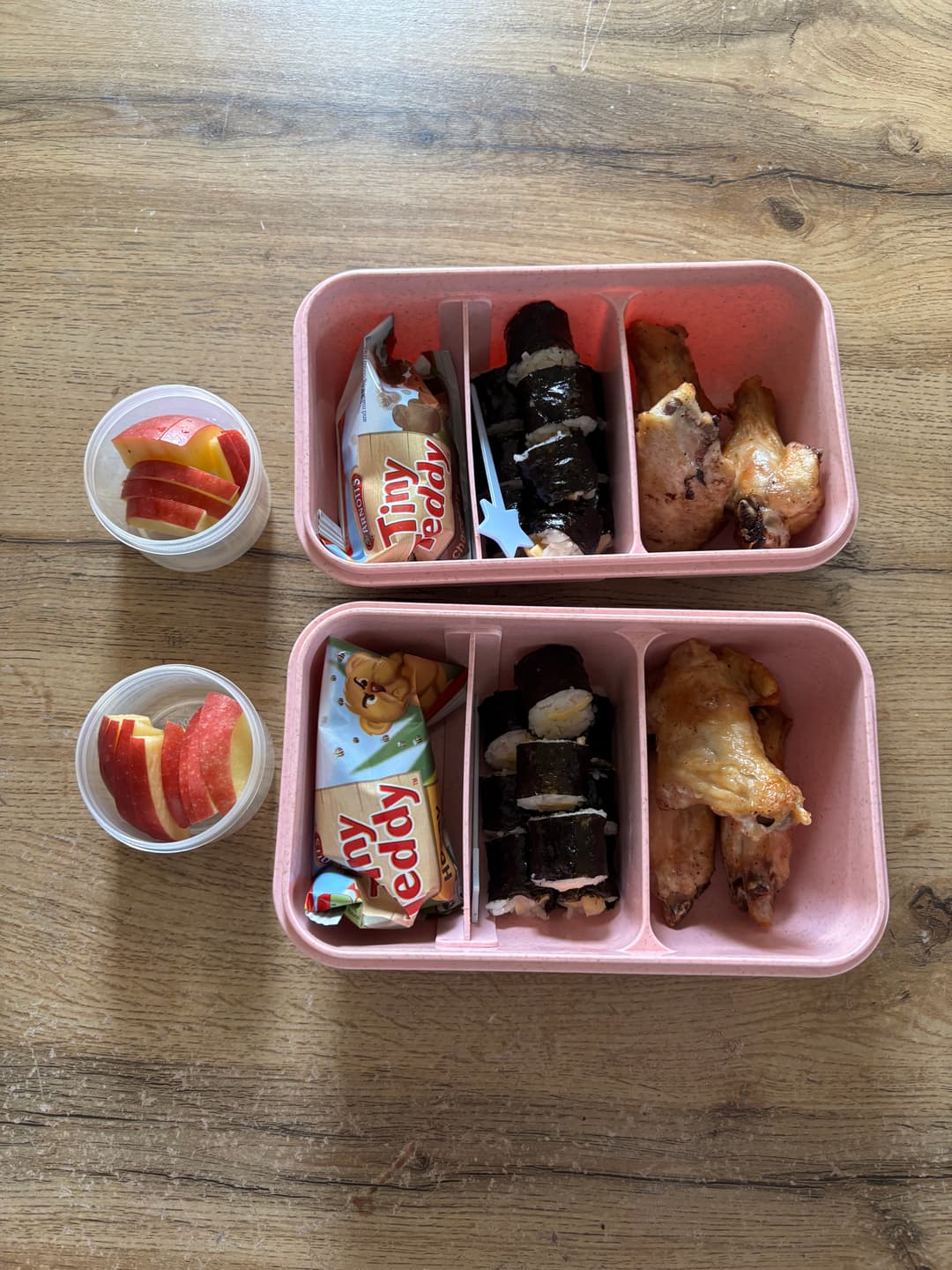
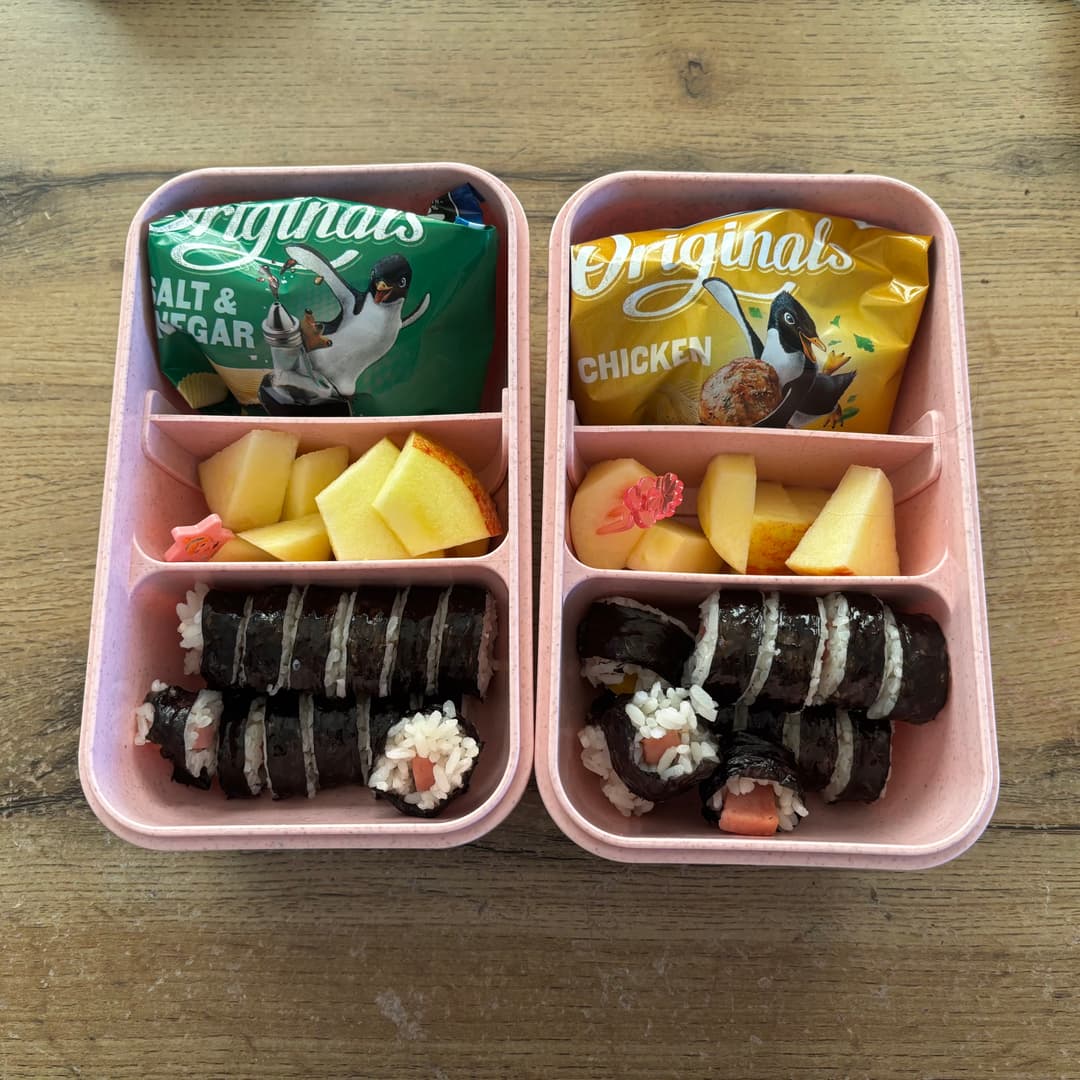
7. We don't yuck someone's yum
I've watched many migrant parents wonder whether it's all right to pack traditional food, or whether a sandwich with a milder smell might be the safer choice. In my youngest's first week of school, I packed curry rice — and she came home downcast, telling me a classmate had said "Ewww." I told her: that friend probably didn't like it because the food was unfamiliar to them, but speaking about someone else's food that way isn't a kind thing to do. For a while she didn't want to take strongly scented food at all — until one day she saw a good friend bring curry chicken, and her spirits lifted again. And yet this same little one, at the dinner table, will pinch her nose at the smell of kimchi and soy sauce on her sisters' plates and go "yuck." So once more I told her: not eating something is your choice, but you mustn't speak about another person's food that way — just as it upset you, your behaviour can upset others too. There's no need to give up what you love for fear of how others might look at you. This is how children learn to recognise difference, to accept it, and to be considerate — at the dinner table at home, and on the school bench alike.
Read More: [Y1] What's in the Lunchbox? · Starting School in New Zealand

Yussi
Writer · Social work student, Massey University
A mother of three girls and a Korean immigrant making Mairangi Bay home — writing about starting school, home learning and everyday life on Auckland's North Shore.
More about Yussi →Join the conversation
Comments
Loading comments...
![[Edu] How To Read a Mid-year Report](/_next/image?url=https%3A%2F%2Fvpayqdatpqajsmalpfmq.supabase.co%2Fstorage%2Fv1%2Fobject%2Fpublic%2Fimages%2Fblogs%2F1782645126986.png&w=1920&q=75)
![[Edu] Keeping Ourselves Safe](/_next/image?url=https%3A%2F%2Fvpayqdatpqajsmalpfmq.supabase.co%2Fstorage%2Fv1%2Fobject%2Fpublic%2Fimages%2Fblogs%2F1780474104440.jpeg&w=1920&q=75)
![[Edu] NCEA Is Changing: Following the Curriculum Shake-Up](/_next/image?url=https%3A%2F%2Fvpayqdatpqajsmalpfmq.supabase.co%2Fstorage%2Fv1%2Fobject%2Fpublic%2Fimages%2Fblogs%2F1779586525636.png&w=1920&q=75)